


Winter is coming—and the threat to the Arctic is seismic
By Dawnell Smith
When you hear oil companies talk about looking for oil through “seismic testing,” put the emphasis on seismic, as in “the violent shaking of the ground.” What they actually mean is using massive 90,000-pound thumper trucks that pound shockwaves into the ground in a dense grid pattern over many miles and many months.
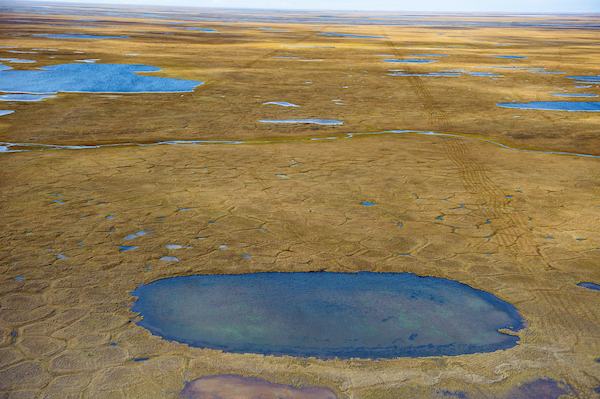
Seismic scars left on the arctic tundra west of the Arctic Refuge on the north slope of Alaska. Photo by Florian Schulz.
Seismic testing lives up to its name—it’s destructive to tundra vegetation and it leaves visible scars for many decades that give evidence to the deeper and more profound damage done to living communities. It can also harm animals, including mother polar bears and their cubs in snow dens.
Right now, the Alaska Industrial Export and Development Authority, a state bank or funding agency, is hoping to conduct intensive seismic groundwork throughout the coastal plain of the Arctic National Wildlife Refuge this winter. AIDEA bid on Arctic Refuge leases back in 2020 because no major oil company was interested—Arctic drilling is costly, risky, and needless, after all.
We sued on behalf of the Gwich’in Steering Committee and allies over that 2020 leasing plan, which was suspended in 2021. Later, AIDEA’s leases were cancelled, and a 2025 lease sale drew no bids.
An empty polar bear den viewed from the snowy surface, with an excavated exit hole and bear tracks, made by the bears when they departed. Photo courtesy of USFWS.
Now, AIDEA is trying to move forward with seismic work this winter after a judge restored its cancelled leases, despite serious feasibility questions and legal problems with the plan under which those leases were granted. It looks like now AIDEA wants to get its hands dirty so it can show it’s a serious player despite not taking the impacts of seismic and drilling seriously or ever having done seismic work before.
The bottom line is that the machinery and intensity of seismic work does real and lasting on-the-ground damage to lands vital to animals like polar bears and caribou, and sacred to the Gwich’in of Alaska and Canada.
Wrenching the living landscape
Thumper trucks destroy tundra, but an equally injurious aspect of this process involves bulldozers dragging man-camps across the ground, ripping up and smashing plants and soil. Let’s put it this way—the living, eating, sleeping quarters of those hired to do the work get wrenched across the living, eating, sleeping quarters of other beings, from pygmy shrews and lemmings to lichens, sedges and grasses. At heightened risk are mother polar bears, who dig out snow dens on the Coastal Plain to birth and nurse their cubs. These bears can be driven from their dens by the thumper trucks and bulldozers, resulting in injury or even death.
Seismic thumper truck. Photo by Sarah LaMarr.
Between the thumper trucks that pound shockwaves into the ground and disturb animals to the churning of man-camps over tundra, the lasting harm resonates, and the entire region would suffer lasting and repeated wounds.
What we can do about it
AIDEA is a state bank agency, not an oil company. The only thing it operates is a funding ring with little transparency or oversight and a legacy of boondoggle projects that cost Alaskans and the state rather than bringing in money.
AIDEA cannot do seismic work on its own because it doesn’t have the equipment or the know-how. So, it has sought bids for companies to help them and posted an “award pending” to ASRC Energy Services. AIDEA is just waiting for federal agencies to pave the way for seismic.
Once the Trump administration releases or announces its new Arctic Refuge leasing and drilling plan, however unlawful or poorly justified, AIDEA is poised to rush in behind it to push for seismic work. Any seismic proposal should require details, permits, and a comment period.
This is where we all can make a difference. You can sign a petition now to oppose seismic and drilling activities on the coastal plain of the Arctic Refuge and then make yourself heard again during the permitting process. You can bet we’ll have something to say and will keep you posted.