


Between a rock and a hard place—Pebble is still the monster lurking under the bed
By Madison Grosvenor
It’s not often we find ourselves on the same side of a legal argument as the Trump administration. But thankfully the government has held its ground on protections for Bristol Bay.
In a move that likely surprised folks across the political spectrum, the administration defended the U.S. Environmental Protection Agency’s decision to protect the Bristol Bay watershed from large industrial mines like Pebble. We were also in court as intervenors to defend those protections.
Because everyone knows Pebble’s a bad idea
The EPA finalized its Clean Water Act determination prohibiting the proposed Pebble Mine –and similar large-scale mining at the Pebble deposit–in 2023. That historic action marked a major victory for the people of the region and a crucial step toward safeguarding one of the most productive and ecologically rich wild salmon ecosystems on the planet.
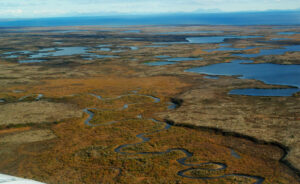
View of Kaskanak Creek in the Kvichak watershed in the Bristol Bay area. Photo by USEPA.
Of course, monsters stay under the bed only so long.
In March 2024, Northern Dynasty Minerals and its U.S. subsidiary, Pebble Limited Partnership, filed a lawsuit challenging the Clean Water Act determination protecting Bristol Bay—a decision founded on years of scientific review, public input, and the hard-won protections for Bristol Bay salmon runs and communities. The State of Alaska and Iliamna Natives Limited and Alaska Peninsula Corporation likewise filed lawsuits challenging the Clean Water Act determination.
So, we joined Tribes, Bristol Bay groups, and other organizations as interveners to defend EPA’s authority to protect one of the world’s last largely untouched and pristine watersheds for salmon.
At the headwaters of Bristol Bay’s pristine watershed lies the Pebble deposit, a copper and gold deposit that the Pebble Limited Partnership proposes to develop into a large-scale mine.
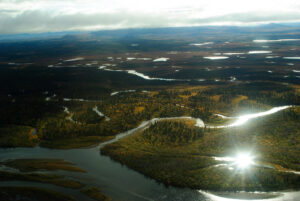
The Nushagak watershed in the Bristol Bay region. Photo by USEPA.
The proposed mine would sit at the headwaters of the North and South Forks of the Koktuli River and Upper Talarik creek — waters that flow into the Koktuli, Nushagak, and Kvichak rivers before reaching Bristol Bay. The Nushagak is Bristol Bay’s largest producer of chinook salmon, while the Kvichak is one of its most important sockeye producers.
These headwaters are the lifeblood of the entire Bristol Bay watershed. Any harm here sends ripples downstream — literally!
EPA’s final determination itself states, “Discharges of dredged or fill material to construct and operate the proposed mine site alone would result in the permanent loss of approximately 8.5 miles of anadromous fish streams, 91 miles of additional streams that support anadromous fish streams, 2,108 acres of wetlands and other waters in the South Fork Koktuli River and North Fork Koktuli River watersheds that support anadromous fish streams.”
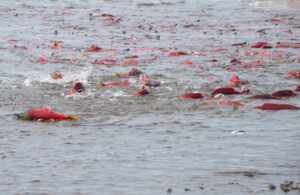
Droves of spawning salmon in the Bristol Bay watershed. Photo by Todd Radenbaugh.
The agency found that discharges of dredged and fill material to construct and operate the proposed Pebble Mine would alter water flow and chemistry, devastate salmon runs and other local wildlife, and disrupt the traditions and ways of life that make Bristol Bay’s fisheries irreplaceable.
In sum, the agency’s analysis of the project concluded that the risks and consequences of mining are not acceptable. We agree.
There was an expectation that litigation and political pressure might push the Trump administration to reconsider or rescind the agency’s determination. But that hasn’t happened.
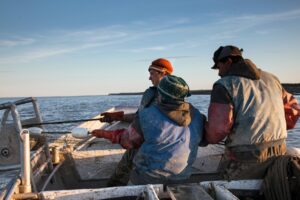
Fishing defines Bristol Bay, home to the largest wild sockeye salmon fishery in the world. Photo by Donald Blank.
Instead, the agency filed its comprehensive 143-page response brief defending its decision in court. The agency’s filing argues that its prohibition on the proposed Pebble Mine is both lawful and necessary to protect the Bristol Bay watershed and its fisheries. We followed with our response brief backing up the determination and highlighting the fact that harms from the loss of headwater streams from Pebble’s construction and operational footprint alone would extend far beyond the deposit site and do irreparable damage.
Until Pebble leaves for good
The fight over Pebble is still far from over. The monster under the bed hasn’t disappeared — it rarely does.
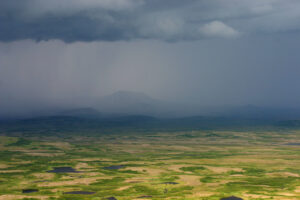
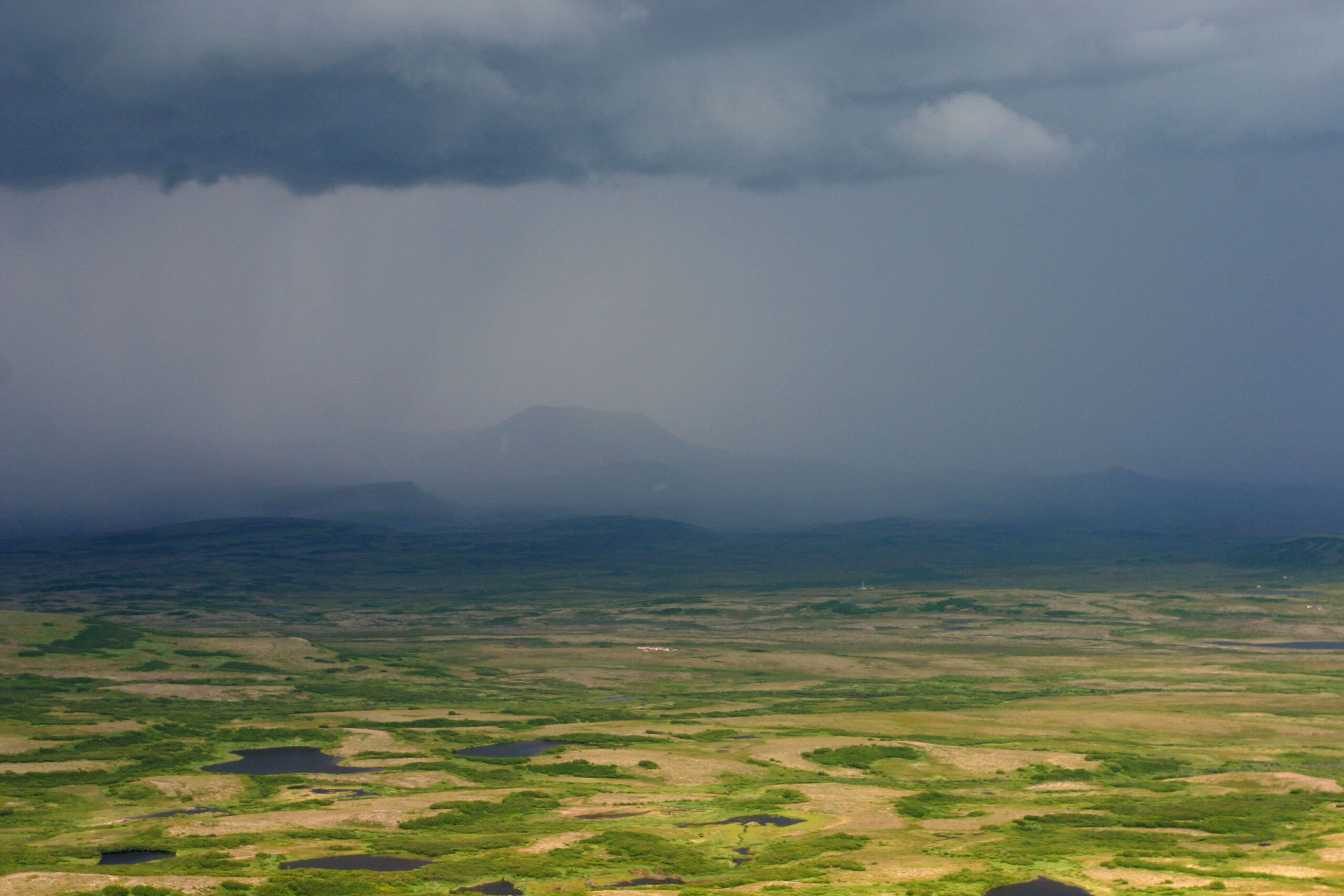
Storm clouds approach the area of the proposed site for the Pebble mine. Photo by Erin McKittrick.
Pebble continues to push hard for settlement in the case and to get the administration to reconsider or rescind its decision.
For those who are familiar with the Pebble saga, you know it has had many twists and resurgences. We have been litigating Pebble off and on since the early 2000’s, and the people and communities of Bristol Bay have been grappling with the constant pressure of industry far longer.
Even in moments of legal victory, the threat of Pebble lingers — appearing in new lawsuits, political maneuvering, and corporate persistence. Living with that uncertainty takes a toll.
The people of Bristol Bay have matched that pressure with equal persistence, continuing to organize, testify, fish, hunt, and speak out for the rivers and salmon that define their home.

Bristol Bay residents say no to the Pebble mine. Photo by Michelle Sinnott.
While the seemingly endless litigation proceeds, the people of Bristol Bay continue to push for permanent protections of their region and to bring the Bristol Bay Forever Act back into active consideration before the Alaska legislature during its 2026 legislative session.
The United Tribes of Bristol Bay explain that this bill aims to protect the entire 36,000-square-mile Bristol Bay Fisheries Reserve from large-scale mining, addressing not only Pebble but more than 20 additional active mining claims in the region.
“We should not be condemned to endless decades of fighting to protect our ways of life from large-scale mines like Pebble,” stated Alannah Hurley, executive director of United Tribes of Bristol Bay.
These words reflect the deep exhaustion shared across the region. After decades of organizing, testifying, and defending their watershed, Bristol Bay’s communities are asking for something simple: the chance to live their lives and sustaining fisheries, cultures, and livelihoods without the constant shadow of a massive mine.
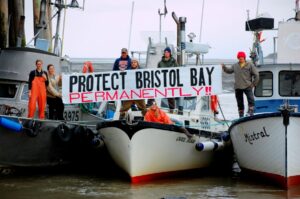
Bristol Bay fisherman protesting mines like Pebble in the Bristol Bay region. Photo by Luke Strickland.
For now, the door to Pebble is still closed, and the protection remains on the books. The monster under the bed can stay there, and we’ll stand with clients and partners to keep it there until it leaves for good.
This is the latest in our “Between a rock and a hard place” series about how the push for “green energy” mining sets up a false choice that pits climate against Alaska as a sacrifice zone. Here is the first in this series.