

Bad news for bears, wolves, and even raptors
By Madison Grosvenor
The Trump administration again stripped away what little federal protection remains for bears and wolves on national preserves in Alaska.
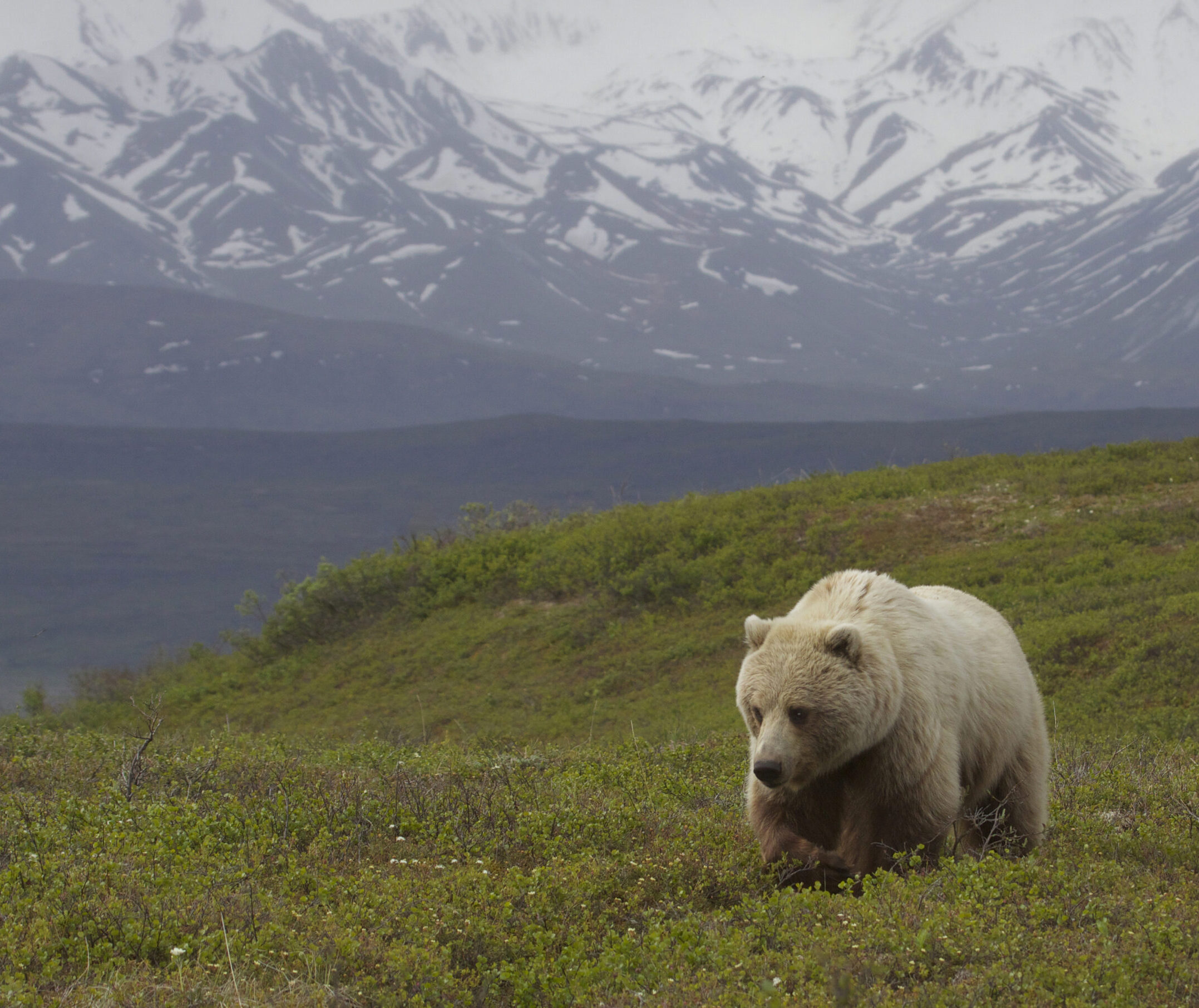
Grizzly in Denali National Park and Preserve. Photo by Gregory Slobirdr Smith.
Last month, officials opened a public comment period on a proposed rule that would greenlight especially cruel and destructive practices like bear baiting on federal lands. The proposal would allow the State of Alaska’s most aggressive predator hunting methods, prioritizing killing bears over the health of entire ecosystems.
You may remember under the Biden administration, the U.S. National Park Service issued a 2024 rule that banned bear baiting and reaffirmed the agency’s authority to manage hunting in national preserves. That rule failed to outlaw extreme practices like shooting mother bears and their cubs at den sites using artificial light, or killing wolves, coyotes, and even their pups during denning season.
This latest Trump rule erodes protections even further, proposing to scrap even those minimal safeguards by rolling back to a pre-2015 framework that imposed very few limitations on state-sanctioned sport hunting methods. Deferring to state regulations would reopen the door to some of the most brutal killing practices on the very public lands most Americans consider safeguarded for animals like bears and wolves for the benefit of all for generations to come.
A page out of the state’s playbook
Before 2015, Alaska permitted a wide range of aggressive hunting and trapping practices aimed at boosting the killing of predator species like bears and wolves.
The Trump administration’s effort to lift the ban on bear baiting in Alaska’s national preserves means the very places we go to hike, boat, fish, forage, and explore could once again be dotted with bait stations — piles of donuts, grease, meat scraps, candy, and other garbage — set out to lure bears into harm’s way.
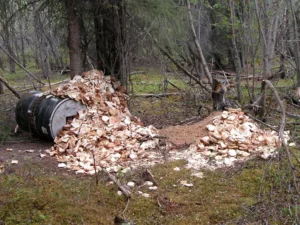
Example of a bear baiting station. Photo courtesy of the National Park Service.
Not only is this an egregious hunting tactic, but these bait stations can show up close to roads and trails, teach bears to prefer human foods, and draw bears to areas where people go to enjoy preserves, creating a dangerous public safety conflict. Park Service is shrugging off these public safety concerns.
Meanwhile, hunters would wait nearby to kill bears drawn in by human food, not quite the definition of “sport” hunting we imagine, where the challenge isn’t tracking or understanding the animal, but building the better heap of junk food.
You may remember from our 2020 lawsuit, that the Organic Act and the Alaska National Interest Lands Conservation Act, require Park Service to conserve wildlife. Bear baiting in national preserves violates these mandates.
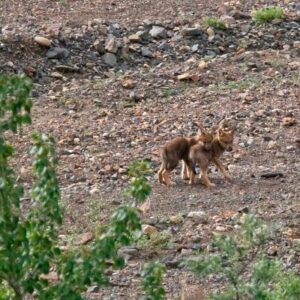
Wolf pups in Denali National Park and Preserve. Photo courtesy of National Park and Preserve.
Even the agency’s own management policy prohibits the hunting of wildlife where the practice “unacceptably impacts park resources or natural processes, including the natural distributions, densities, age-class distributions, and behavior of harvested species.”
Bear baiting directly contradicts that mandate and is only one part of a broader set of troubling practices included in the rule.
The proposal would also allow killing black bears — including cubs and mothers with cubs — at den sites using artificial light like flashlights and spotlights, as well as targeting wolves and coyotes during the denning season, and hunting bears with unleashed dogs.
These strategies are aimed at reducing predator animals like bears at nearly any cost under the guise of boosting moose and caribou numbers, fundamentally reshaping the natural dynamics between these animals.
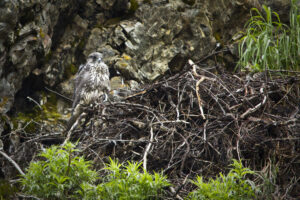
A young gyrfalcon perched near nest in Denali National Park and Preserve. Photo courtesy of Jacob W Frank.
It doesn’t stop there. The rule would even permit the removal of raptor chicks from nests for use in falconry training, underscoring just how far-reaching these changes could be.
This goes beyond management and into direct exploitation, treating wildlife as a resource to be selectively stripped from its habitat for niche human activities rather than protected as part of a functioning ecosystem.
Threats to rural subsistence users
The threats don’t stop and end with wildlife. The proposal would unlawfully undermine rural subsistence protections established under the Alaska National Interest Lands Conservation Act by effectively redefining “subsistence” to include all Alaska residents rather than limiting them to rural residents.
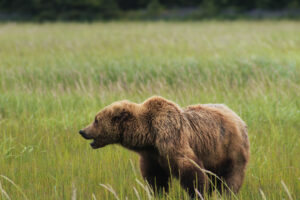
A sow communicates with a boar heading her way in Lake Clark National Preserve. Photo by Madison Grosvenor.
The state and federal governments define subsistence users very differently. Under Alaska law, any Alaskan can hunt under state subsistence regulations regardless of where they live. Federal law defines subsistence users as only rural residents who have a customary and traditional use of the resources. Thus, on federal lands, subsistence hunting is managed by the Federal Subsistence Board, which ensures rural communities have priority access for hunting under federal regulations.
This change is part of an organized effort by Safari Club International to continue their push to expand sport hunting on federal lands by eroding protections for animals like bears and wolves, pandering to and prioritizing trophy hunters over rural subsistence users.
By allowing so-called State “subsistence hunts” open to all Alaska residents, the rule would erase the statutory distinction between sport hunting and rural subsistence harvests, directly contradicting Congress’s intent to prioritize rural communities that depend on fish and wildlife for food, shelter, and cultural survival.
This broadened definition risks increasing competition on the ground, weakening federal protections, and creating real uncertainty and harm for rural communities and their ways of life.
How you can help
About 22 million acres of national parklands in Alaska are managed as national preserves. Every year, recreators flock to these parklands hoping to catch a glimpse of the bears and wolves that make Alaska so special.
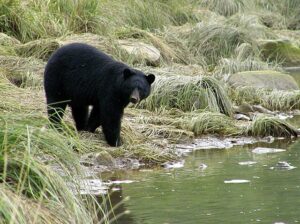
Black bear at waters edge in Glacier Bay National Park and Preserve. Photo courtesy of NPS.
These lands were never meant to become proving grounds for the most extreme forms of bear and wolf killing. They were set aside to protect intact ecosystems, safeguard wildlife, and ensure that future generations can experience Alaska’s wild places and wildlife.
If this proposal moves forward, it won’t just be bears, wolves, and raptors that pay the price. It will be the integrity of our national preserves, the safety of people who use them, and the rights of rural communities who depend on them.
The good news is that this decision is not final. The National Park Service is accepting public comments right now until April 24th.
Now is the moment to speak up. Submit a comment, share your concerns, and make it clear that Alaska’s national preserves should be managed for conservation, not cruelty.