


Between a rock and a hard place—hard rock mining’s toxic stew
By Dawnell Smith
Industrial mining destroys the lands where it blasts, drills, crushes, and digs. It poisons streams, rivers, and lakes and requires perpetual water treatment to try to keep pollutants from harming communities downstream.

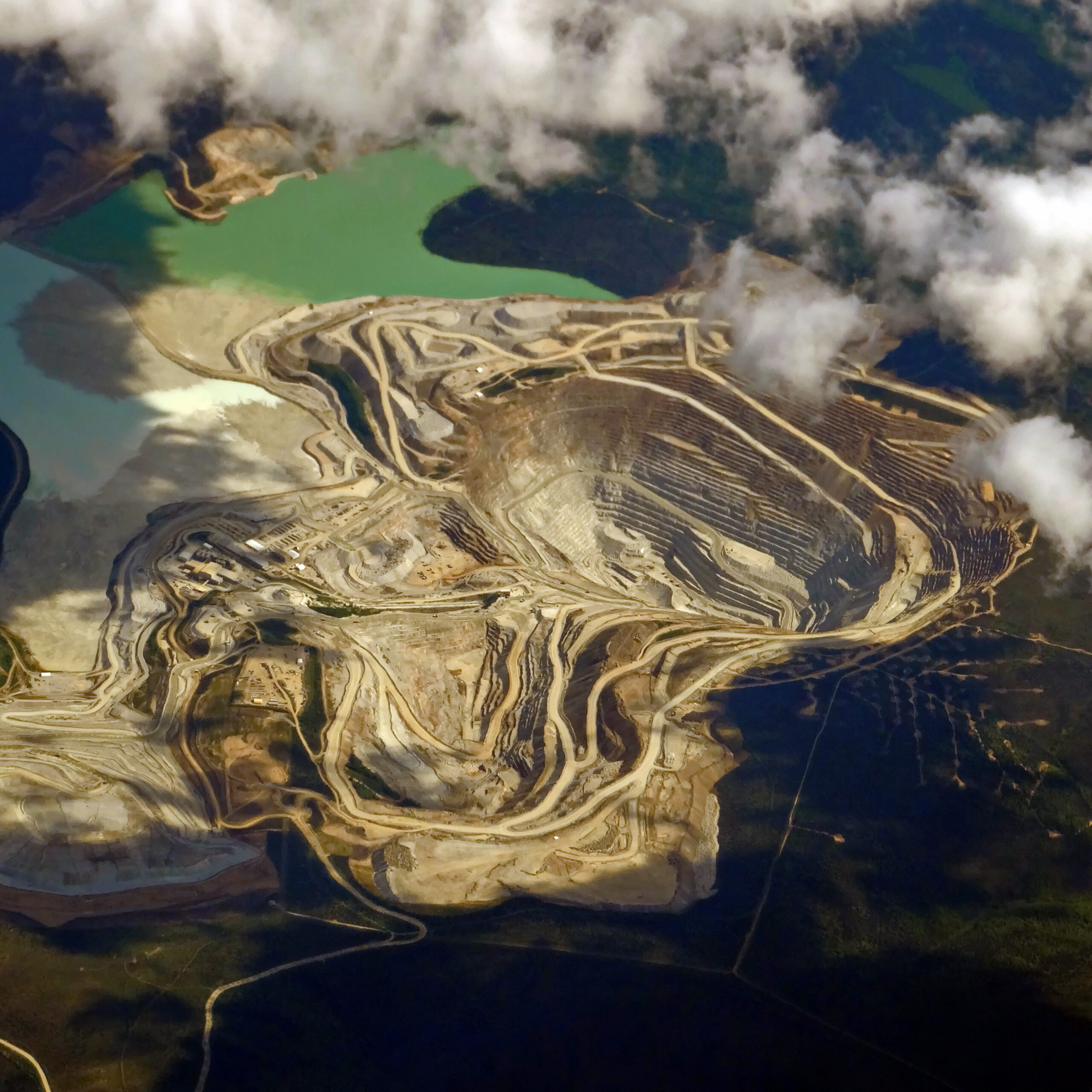
Aerial view of Fort Knox gold mine. Photo by Brian Wotherspoon.
Hardrock mines upturn and churn the land with tunnels and shafts or dig massive open pits, and create destruction across expansive infrastructure that includes roads, storage and processing areas, facilities, and ponds, dams, and more.
Once extracted, the ore gets crushed and processed, often with chemicals like cyanide that separate the minerals from rock and leave behind a toxic stew.
That’s an enduring legacy of hard rock mining–the mining industry hoisting the burden of its toxic stew onto us.
Toxic, abandoned mines
The U.S. Environmental Protection Agency estimates that abandoned hard rock mines have contributed to the contamination of 40 percent of the country’s rivers and 50 percent of lakes. Sit with that for a minute.
At least 22,500 abandoned hard rock mine pits or tunnels threaten human health and the environment on federal lands, according to the U.S. Government Accountability Office. These abandoned sites can leak toxins like arsenic and other heavy metals into waterways, in turn killing fish, plants and animals. The contamination harms people and their communities, too.

Spinning ore crushers at Fort Knox. Photo by Nick Bonzey.
Toxic runoff can end up in drinking and irrigation water, kill off fish and wildlife, make people sick, devastate places of otherwise abundant life for hundreds or even thousands of years, and destroy community economies. People, animals, and places suffer long after the mine closes and the company no longer exists.
The financial burden falls on small businesses, farms, communities, and entire sectors of the national economy, as well as on taxpayers, who end up footing the bill for trying to clean up these mine sites or prevent their toxins from getting into or spreading.
The fact is that the 1872 Mining Law governing mining on federal public lands does not remotely address the true cost of modern industrial hard rock mining on the land and communities. That law from the days of pick and shovel mining fails in every way to address the real, long-term damage done by the massive excavation and money-making machinery of industrial mining.
The law needs to change and believe us, lots of people and groups keep trying to do it, but the mining industry puts the butt of its pick on the backs of the political players who could and yet fail to find the will.
From the oozing to a deadly deluge
Our legal work on the proposed Pebble mine focuses on defending the U.S. Environmental Protection Agency’s 2023 Final Determination that concluded that a mine like Pebble would have unacceptable adverse effects on salmon and the watershed.
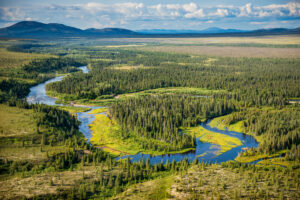
The Koktuli River winds its way down into Bristol Bay. Photo by Carl Johnson.
The agency based its decision on the harm that would come from placing an extensive, large-scale mine – and, in the process, eliminating 91 miles of streams – in the headwaters of Bristol Bay. In other words, the agency concluded that that impacts from a mine’s footprint alone would reverberate downstream by depriving fish of the nutrients and essential habitats they need to survive and thrive.
The decision to prohibit a mine like Pebble in Bristol Bay watershed wasn’t based on the potential harm from active industrial mining, but any Pebble-like mine would drive devastation that would endure for decades and centuries. Hard rock mining contaminates the land and water in many ways, from the relentless and often unnoticed oozing and spilling of toxins to full-scale Exxon Valdez-level catastrophe.
Simply put, hard rock mining puts out a varied and constant flow of pollutants, and with the Pebble proposal, along with other mining enterprises, the concerns range from acid mine drainage to tailings dam failures.
The soils mined for gold, silver, copper, and other ore are often rich in sulfide minerals, which react with water and air to form sulfuric acid. This acid dissolves other harmful metals or metalloids like arsenic from the surrounding rock, which shows up across the mine site and beyond, from waste rock piles and tailings to open pits, underground tunnels, and leach pads. The material accumulates and builds, steadily damaging the environment at the mine site and anywhere it leaches or spills into the ground or waterways that take it downstream.
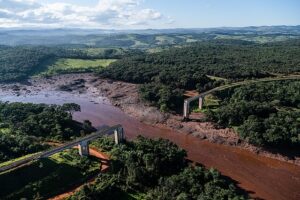
In 2019, the Brumadinho dam burst, vast areas were covered in mud and became submerged in water. Photo by Eric Marmor.
The toxins can devastate waterways and aquatic life for hundreds and sometimes thousands of years and require ongoing clean up and monitoring well after mines close and corporations dissolve and resources for tending to the problem dry up. Nearby communities of plants, animals and human life pay the cost with their health, lives, and livelihoods while taxpayers foot the bill for whatever cleanup the federal government decides to do.
The dams that hold toxic tailings ponds can leak or fail completely, sending deadly sludge over vast areas. A 2019 dam failure in Brazil killed hundreds and left a path of immediate destruction and enduring harm. Scientists may now believe they understand why a dam that had not been used for dumping mining waste for three years failed, but what else do we miss, what more can go wrong with dams intended to hold toxic waste forever?
Spills and accumulations
Our current legal work on the proposed Ambler and West Su industrial mining roads centers on the impacts these roads would have on communities, land and water, plants and animals through gravel mining, asbestos dust, the disruption to salmon runs and caribou migrations, and nonstop industrial traffic.
But these proposed roads—their planning and promotion costs already subsidized with public money—aim to enrich mining companies and become part of a contaminate-producing complex.
As we said before, the current mining law won’t protect us. It won’t even compensate us.
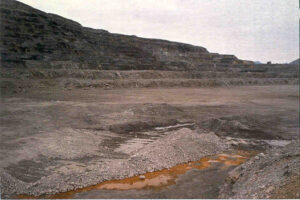
Pit mine drainage at Red Dog Mine. Photo by George Page.
Industry heads and political types sometimes talk about the Red Dog Mine in Northwest Alaska as the poster child for “good mines,” but that kind of tall tale doesn’t change the downstream facts. At the end of last year, an amassing of sulfur dioxide led Red Dog to give workers respirators and go bags to protect them from an odorless gas that can cause health problems.
The mining company said it increased air monitoring at the mine and nearby villages, but what can communities do when residents don’t get a supply of respirators and go bags? Where will they go anyway? What will they do when these massive mines close and leave behind the mess?
Sulfur dioxide rarely triggers this kind of rapid response or concern, but the spewing and spilling of contaminants happens every day, day after day, on site and off. Mining transportation spills occur far more often than most people know and include processing chemicals like cyanide solution, as well as zinc, lead, diesel fuel, mine waste, blasting agents, water treatment chemicals and more.
The permitting process for these mines are meant to give accurate information on the risks of these spills before permits get issued, but a 2022 Alaska Mining Report shows that in its analysis of five mines in Alaska, spills were severely underestimated during the permitting process.
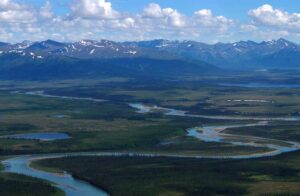
The Ambler River, east of Kobuk Valley NP. Photo by Mike Records, USGS.
When what’s presented as risk in permit applications fails the reality test again and again, it’s time to stop believing the predictions and promises, and start demanding laws and permitting processes that truly do protect people and the places that sustain us. What’s critical isn’t the metals and minerals that make giant global mining companies rich, but the well-being of the water we drink, the air we breathe, the land where we get our food, and the communities of life that make human life possible and joyful.
The Red Dog Mine often makes the top ten list for annual spills with the Alaska Department of Environmental Conservation—and that’s not the glossy poster we should keep hanging on the wall.
This is the latest in our “Between a rock and a hard place” series about how the push for “green energy” mining sets up a false choice that pits climate against Alaska as a sacrifice zone. Here is the first in this series.