


Margaret Williams talks about the Arctic
By Margaret Williams, Trustees board member
As a kid growing up in a rural New England town, I spent all of my free time outside climbing trees, building secret forts in the woods, swimming, sledding and ice skating with my family and friends. When I was older, I took an interest in the wild denizens of the fields and forests surrounding our home, following tracks in the snow and spying on deer, ducks and foxes.
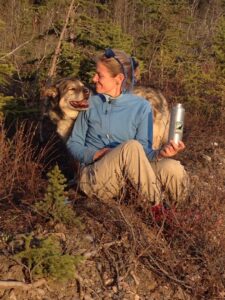
Margaret and her pup, Tana, in Denali. Photo courtesy of Margaret Williams.
At some point in my teens, a sense of wanderlust hit me. By dialing toll-free numbers listed in magazine ads, I could order free travel brochures from Montana, Colorado, and Wyoming. The brochures’ full-page photos of clear, rushing creeks and snow-frosted Rocky Mountains captured my imagination. I began to dream of exploring those big, wild landscapes.
Alaska, however, did not enter my consciousness until the spring of my senior year in college (1989), when devastating photos of oiled birds and soiled coastlines were splashed on the headlines of every major newspaper. I was discovering for myself the story of Prince William Sound’s incredible natural treasures at the very moment they were being ravaged by millions of barrels of crude oil spilled from the ruptured tanks of the Exxon Valdez.
While crushed by this loss, I was captivated by the scale and beauty of this faraway and wild region. Meanwhile, through an environmental studies course, I was learning about other areas of immense ecological importance and the major threats facing them, such as industrial fishing, deforestation, and other human impacts.
When peace parks were possible
My new awareness of environmental issues was further stoked that spring when I read an article reporting on a newly signed agreement between the two Cold War super powers of the time. Mikhail Gorbachev, general secretary of the Communist Party of the USSR, and George Bush, president of the U.S., had pledged to create an international park across the maritime boundary in the Bering Strait.
I’d never heard about peace parks before, and the concept of conducting diplomacy through conservation floored me. It made brilliant sense to bring people together to save the natural world, I thought. I had been studying the Russian language with the vague idea of entering the Foreign Service. But by the time graduation came, I had decided to pursue conservation.
Following graduate school, I lived in Russia as the country was emerging from its Cold War identity and opening up to the west and western values, ideas and people. Working alongside talented Russian environmentalists and scientists taught me about the country’s biodiversity, much of which was encompassed in a vast network of protected areas. I traveled to some of the most remote corners of the Russian Arctic, Far East, and Northwest, meeting people who were dedicated to studying and conserving their region’s natural heritage.
A new era for the Arctic
Upon my return to the U.S., the World Wildlife Fund had launched a major initiative to identify and conserve biodiversity in the world’s most significant “ecoregions.” I lucked out when WWF determined that the Bering Sea was one of these globally important areas and hired me to start a program that would span the waters of Russia and the United States.
Margaret Williams with the World Wildlife Fund, in the Arctic. Photo courtesy of Margaret Williams.
For the next 25 years, I built a team in Alaska that included many wonderful people who were passionate about wildlife, climate change, community engagement, science, and policy. We collaborated with colleagues across the Arctic, especially from Russia, where WWF had over 100 staff members. From the late 1980s until 2022 (Russia’s full-scale invasion of Ukraine), Alaska and Russia scientists, Indigenous residents, resource managers and conservationists developed strong professional ties and friendships, making possible huge strides in understanding and conserving shared species and ecosystems of the Bering Strait region.
In war’s wake
It’s hard to believe that such transboundary work is no longer possible, but when Russia attacked Ukraine in February 2022, the U.S. and European nations moved swiftly to punish Russia for its illegal actions, imposing new economic sanctions and diplomatically isolating Russia.
Though first and foremost a humanitarian crisis, Russia’s brutal war also has numerous environmental impacts, inside and outside of Ukraine. Among those is the halt in hundreds of cooperative programs in wildlife conservation and research.
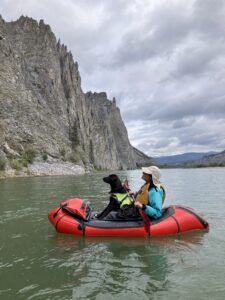
Margaret packrafts the Hart River in the Yukon. Photo courtesy of Brad Meiklejohn.
Years after reading for the first time about the idea for Beringia International Park (which never came to fruition), I am now a Senior Fellow in the Arctic Initiative at the Belfer Center for Science and International Affairs in Harvard University’s Kennedy School. I convene study groups for graduate students on Arctic environmental issues, mentor students, organize expert discussions and workshops. I am also involved in research and writing projects, for example, examining the impact of interrupted cooperation between Alaska and Russia on conservation and science.
Many of the Kennedy School students are planning to go into public service, and I try to make a case about why, for their future careers and lives, they need to know and care about the Arctic’s special ecological and cultural values, as well as the impacts the Arctic has on the rest of the planet.
Nature hemmed in
Through my previous work with WWF and many wilderness adventures with my partner, I have lots of stories to draw upon to make my case. On Hall Island in the northern Bering Sea, I’ve crouched on slimy rocks while the sky filled with crested auklets circling above me. On Lake Iliamna in the Bristol Bay watershed, I’ve been spellbound by ribbons of salmon swirling along the shore as they returned to their natal spawning grounds. On the coastal plain of the Arctic Refuge, I’ve watched in awe as tens of thousands of caribou streamed steadily across the tundra.
The more I travel and witness how nature is being hemmed in by the relentless surge of economic development, the more I realize how remarkable Alaska is. I am also reminded about how hard we must all work to ensure that current protections for many places – the Arctic National Wildlife Refuge, Gates of the Arctic National Park, the Bristol Bay watershed to name a few – must remain intact.
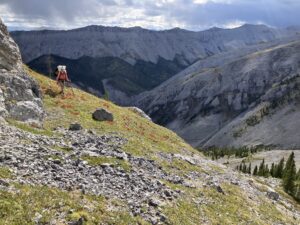
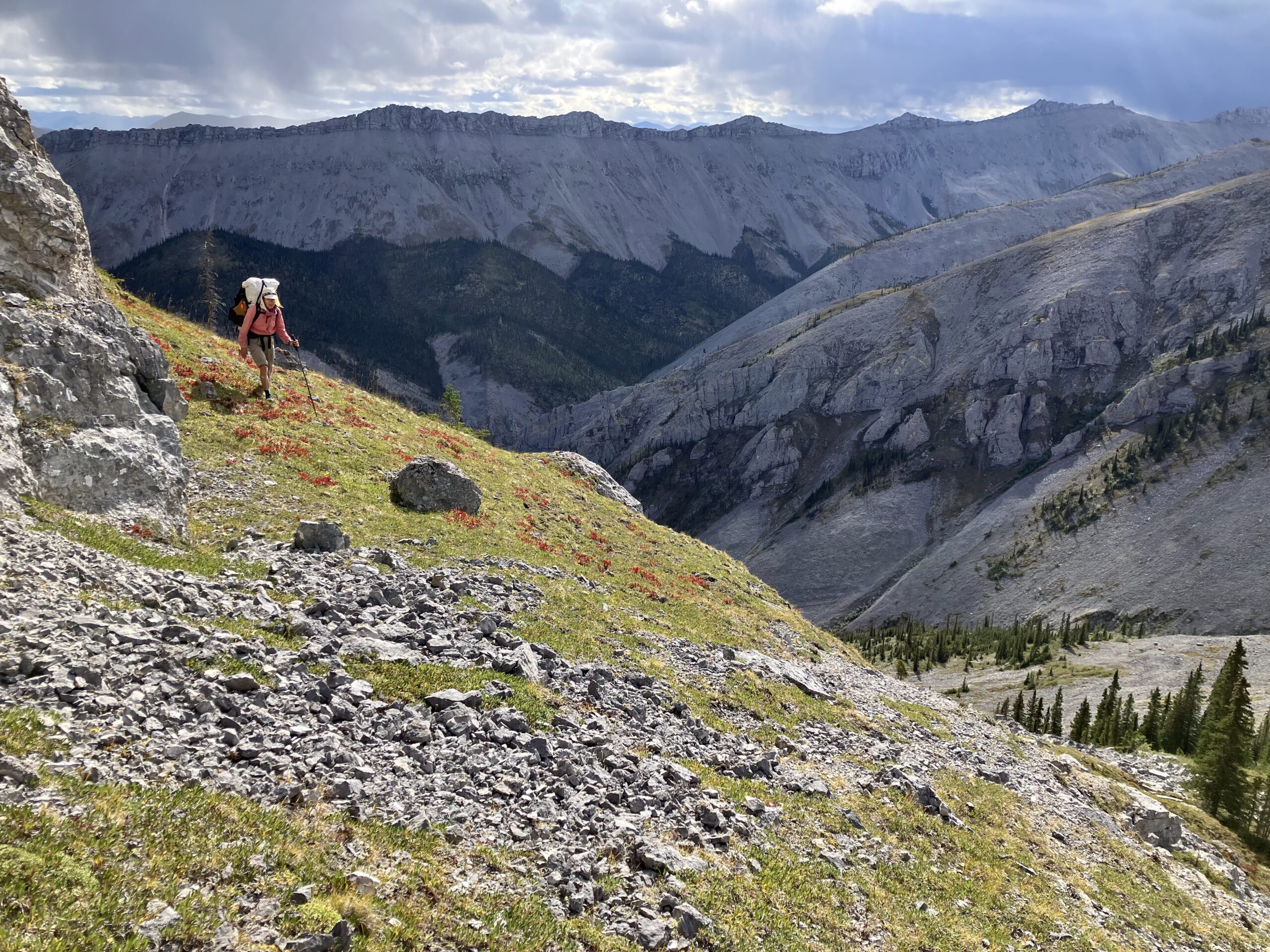
Hiking on a packrafting trip on the Hart River. Photo courtesy of Brad Meiklejohn.
This is why I am glad to be a part of Trustees for Alaska. The mission of Trustees is to defend Alaska’s lands, waters, wildlife, and people. And, right now, defense is the name of the game. The team at Trustees is professional, experienced, dedicated, and persistent–the exact qualities needed to meet one of most challenging moments for conservation in Alaska and the country, and for the people and animals who rely on and are nourished by Arctic landscapes.