

The big bad budget bill and what Alaska stands to lose
By Madison Grosvenor
While fireworks lit up the sky this Fourth of July, parts of Alaska’s conservation future quietly dimmed.
President Trump signed the controversial budget reconciliation bill into law on Independence Day, fulfilling a campaign promise to prioritize “energy dominance” over people and climate.
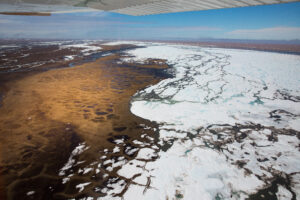
The Canning River and the Coastal Plain in the Arctic Refuge. Photo by Lisa Hupp.
This comes after the Senate voted to pass the budget reconciliation bill 51-50 with Vice President J.D. Vance casting the tie-breaking vote after Alaska’s own Senator Lisa Murkowski cast the tie vote. Even though, immediately after voting for the bill, Senator Murkowski said that she hoped the House would continue to make changes to the bill and send it back to the Senate for additional amendments, it was nearly certain that that was never going to happen.
Senator Dan Sullivan and Representative Nick Begich likewise voted in favor of this damaging bill, while attempting to hide the damage it will do to their home state. And on July 3rd, the House joined the Senate in passing the bill, sending it to the President’s desk for signature.
Leasing in the Arctic—full throttle
This law pushes for expanded opportunities for oil and gas exploitation in some of the most ecologically sensitive and culturally sacred lands in the country.
The new law requires four oil and gas lease sales in the Coastal Plain of the Arctic National Wildlife Refuge. The Coastal Plain is an area that is critical calving and nursery grounds for the Porcupine Caribou herd, polar bear denning areas, and is sacred to the Gwich’in Nation of Alaska and Canada.
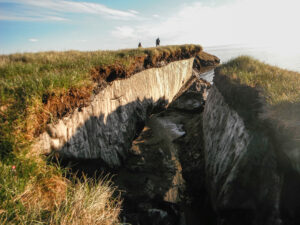
Coastal erosion in the Teshekpuk Lake Special Area in the western Arctic. Credit: Brandt Meixell.
It also mandates five massive lease sales in the National Petroleum Reserve-Alaska.
The first sale is directed to happen within a year. Each sale is to offer at least 400,000 acres in the Arctic Refuge and at least 4 million acres in the Western Arctic.
The law also revives a 2020 Trump-era plan that opens sensitive areas like the Teshekpuk Lake Special Area to leasing.
“Congress just passed, and the President just signed, a cruel and reckless budget bill that will hurt Alaskans and auction off public land leases for oil and gas drilling while funneling more wealth to corporations and billionaires,” said Vicki Clark, executive director of Trustees for Alaska. “It calls for expansive and needless fossil fuel leasing on lands vital to Arctic communities, health, and functioning ecosystems.”
What this means for the Arctic and for people
The new law shifts 70% of oil and gas revenue from new leases directly to the State of Alaska after 2034, a move specifically designed to curry support from local lawmakers and further entrench fossil fuel interests. The State and Federal government have historically divided those revenues 50-50.
However, a new analysis by Taxpayers for Common Sense challenges the fiscal rationale behind such revenue shifts, casting doubt on the viability of Arctic oil leasing as a meaningful source of federal income. The report found that even under the most optimistic scenario, federal revenues from Arctic Refuge lease sales would total just $30 million, which is less than 0.001% of the $4.5 trillion in proposed tax cuts they were intended to offset.
While this might boost state revenues, it will only deepen long-term dependence on oil while worsening the climate and health consequences already hitting Arctic communities hardest.
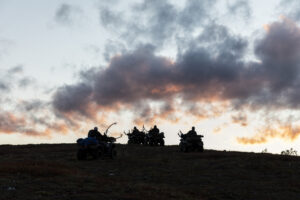
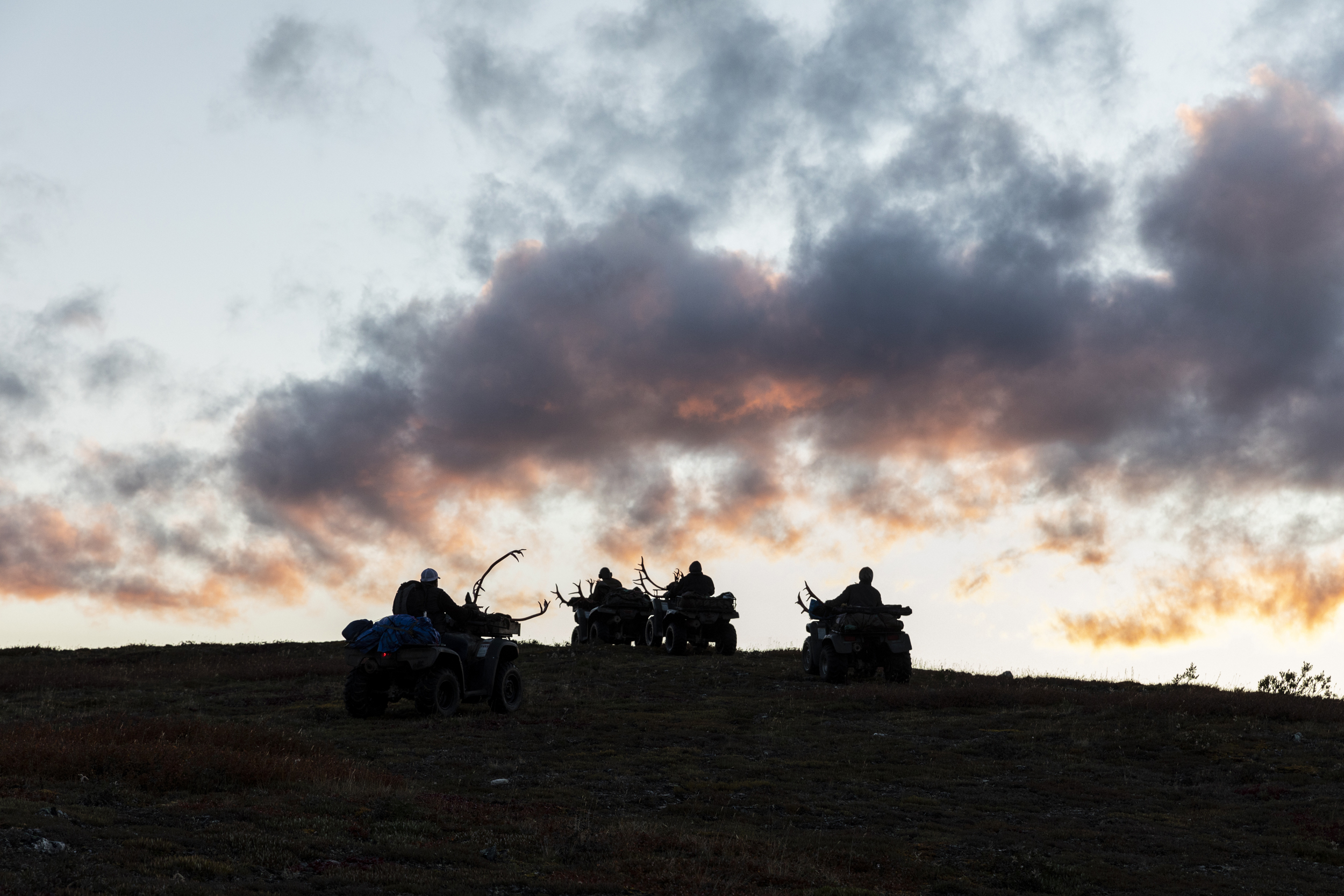
Gwich’in subsistence hunters in the Refuge. Photo by Keri Oberly.
The Arctic National Wildlife Refuge is one of the most iconic and intact wilderness areas in the United States. It is the homeland of the Gwich’in people, who have relied on the Porcupine Caribou Herd for food, culture, and survival since time immemorial. It is known to the Gwich’in as “the sacred place where life begins”.
The Refuge is also home to threatened polar bears, musk oxen, migratory birds, and other species that depend on this fragile ecosystem.
The Western Arctic is a place of global ecological importance, especially the Teshekpuk Lake region, which supports hundreds of thousands of migratory birds and thousands of caribou that calve there each spring, providing priceless cultural resources to local communities.
Industrial activity in these areas is not only a threat to wildlife, but also to Indigenous health and cultural survival.
Even exploration work like seismic testing requires massive trucks and heavy equipment that damage the tundra, crush vegetation, and can collapse polar bear dens and cause mothers to abandon their cubs. These impacts are long-lasting and irreversible.
Meanwhile, giant oil corporations gain easy access to previously protected lands, while frontline communities are left to contend with the fallout of melting permafrost, infrastructure collapse, climate-driven displacement, and declining wildlife populations.
What’s next
This bill may have been signed into law, but its impact is far from settled.
For now, one thing is certain. Alaska faces a future where some of its most vibrant and culturally vital landscapes are on the brink of irreversible change.
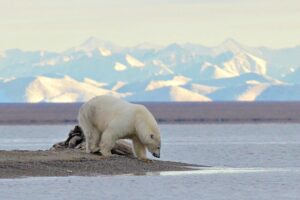
Polar Bear at the end of the spit in the Arctic National Wildlife Refuge. Photo courtesy of Sheri Spitzer.
“We will stand with clients and partners to defend and protect sacred lands in the Arctic Refuge and Arctic landscapes indispensable to Alaskans for their food and cultures, and to all Americans for beauty, solace, recreation, connection with nature and other animals, and the health of Earth,” said Clark.
Outside of the Arctic provisions, the law continues to be a serious blow to Alaskans and the nation as a whole, stripping away critical support our communities rely on.
It ends tax credits for wind and solar, undermining clean energy projects that help remote villages reduce costs and dependence on diesel. Provisions to open Cook Inlet to more oil and gas leasing threaten our fisheries and marine ecosystems.
Meanwhile, Alaska will bear the brunt of cost shifts that will push our state budget deeper into deficit, jeopardizing health care, food access, and basic public services. This law ignores the unique challenges we face and puts Alaskan lives, livelihoods, and land at risk.
Still, there’s strength to draw from this moment. While the outcome is a setback, it could have been far worse. Thanks to the tireless advocacy of Alaskans and our partners across the country, some of the most damaging provisions were stripped from the final bill. We succeeded in removing mandates that would have forced construction of the Ambler Road, and we stopped harmful language that would have overridden judicial review or green-lighted seismic exploration in sensitive areas. These wins are real and they’re worth celebrating.
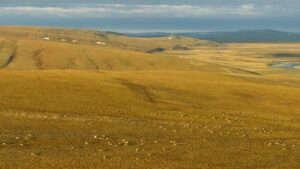
The western Arctic. Courtesy of www.protectthearctic.org.
The fight for Alaska and the Arctic’s future just entered a new chapter. It will be written not just in courtrooms and Capitol Hill, but in the villages, rivers, and tundra of the far north.