

The State wants public money to pay for a privately owned road in Izembek
By Dawnell Smith
The Alaska Department of Transportation has proposed that federal and state money pay for a road in Izembek National Wildlife Refuge that would be privately owned, despite the impact this road would have on a narrow isthmus vital to animals like caribou and migratory birds like Brant and Emperor geese, as well as to the food and cultural practices of western Alaska communities.
Right now, you can share your concerns about this amendment to the Statewide Transportation Improvement Program during a comment period that ends on Aug. 2. Use this link to submit a comment online or email it to dot.stip@alaska.gov.
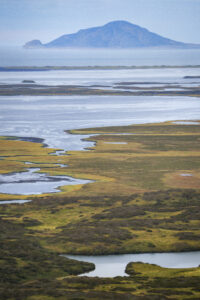
Aerial view of the Izembek National Wildlife Refuge isthmus and lagoons. Photo courtesy of Running Wild Media for Defenders of Wildlife.
It’s worth pointing out that public money should not go toward building a privately owned road, particularly when doing so will have irreversible impacts on the refuge and divert money away from public transportation needs of the entire state. King Cove is one of hundreds of villages off the road system. Its population has been in decline and stands at around 380 residents as of July 2025, according to the Alaska Department of Labor and Workforce Development population estimates.
Millions of dollars of public funding have already gone to King Cove’s robust medical clinic and a high-speed hovercraft for emergency transportation. The city sold the hovercraft, but records show it successfully transported people every time requested to do so.
The road project description calls for building an “all-season” gravel roadway connecting King Cove to Cold Bay, but every Alaskan knows that no road is navigable or safe to drive all year, particularly in a region known for notoriously treacherous weather conditions.
We’re in court already over the Interior Secretary’s approval of the land exchange making way for this road because he did so without public process, congressional oversight, or meeting legal mandates for protecting conservation and subsistence uses.
The State has projected this road will cost $18 million of public money, but those millions of dollars could meet any number of transportation needs across the state.
Make yourself heard on this proposal before Aug. 2.
And then there’s the permit
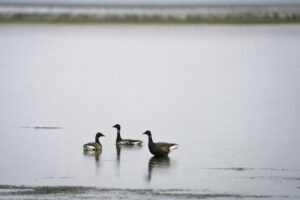
Brant flock in an Izembek Lagoon. Photo courtesy of Running Wild Media for Defenders of Wildlife.
The U.S. Army Corps of Engineers issued a permit this month for the proposed gravel road in Izembek. The Corps’ letter briefly outlines how the project will toss gravel and fill material into waterways, rip up and drop waste into wetlands, and mine for gravel to build the road at 14 locations along the road’s corridor.
This road would be built on a narrow isthmus between two lagoons, so waste material will be discarded into a watershed that moves broadly across an area that sustains an array of fish, shorebirds, sea mammals, caribou, bear, and waterfowl like the world’s entire population of Pacific black brant geese. The permit’s constraints on the impacts to clean water are minimal and accompanied with caveats like “to the extent practicable.”
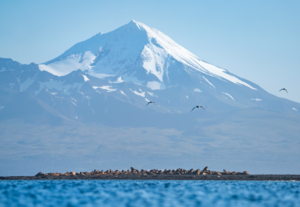
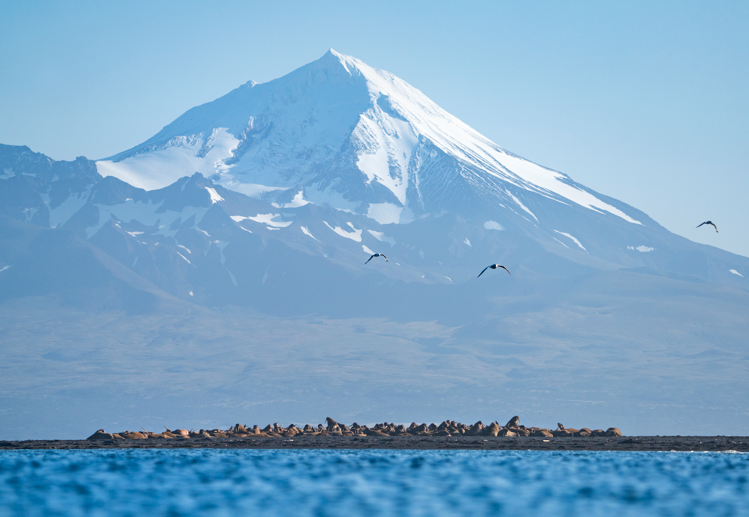
Walrus haul out in Izembek National Wildlife Refuge lagoon. Photo courtesy of Running Wild Media for Defenders of Wildlife.
Section 404 of the Clean Water Act requires that permits be issued before dredged or fill materials can be discharged into waters of the United States, a designation that includes streams, rivers, and wetlands as federally protected from pollution.
The Izembek Isthmus is all about wetlands and the living communities sustained by them. With this permit, the Corps fails on so many levels to protect subsistence and the ecological health of Izembek Refuge—the very things we continue to defend in court.