

A seismic threat
By Dawnell Smith
When industry looks for oil, it sets the stage for massive industrialization but also does immediate harm to land and wildlife.
Still from Trustees’ seismic animation.
Right now, the Alaska Industrial Development and Export Authority has proposed looking for oil through a method called seismic testing on the coastal plain of the Arctic National Wildlife Refuge this winter and could spend up to $175 million of public money to do it.
The details of the proposal are scarce, but it’s clear that the plan threatens an Arctic landscape vital to wildlife and sacred to the Gwich’in of Alaska and Canada. Already, AIDEA is mobilizing resources outside the Refuge to prepare for seismic operations, despite not even having its permits in hand yet.
What can you do to stop it?
-
- Sign up for our newsletter to stay up to date when and how to speak up for the Refuge.
- Sign an Alaska Wilderness League petition right now to tell oil companies to stand down from doing seismic.
Plus, check out part one of our seismic animation to see what is at stake.
Dirty work
AIDEA quietly filed an application to conduct seismic testing this summer but recently filed an update as required by the court after oral argument in October concerning our lawsuit challenging Trump’s Arctic Refuge leasing plan. In its report to the court, AIDEA stated that staging and preliminary work outside of the Refuge is underway and will ramp up at the end of November.
The state-owned corporation can’t do the work itself since it’s a financing arm of the state, not an operator, so it has contracted out the dirty work.
And let’s be clear—it is dirty work.
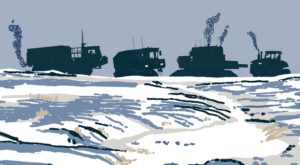
Still from Trustees’ seismic animation.
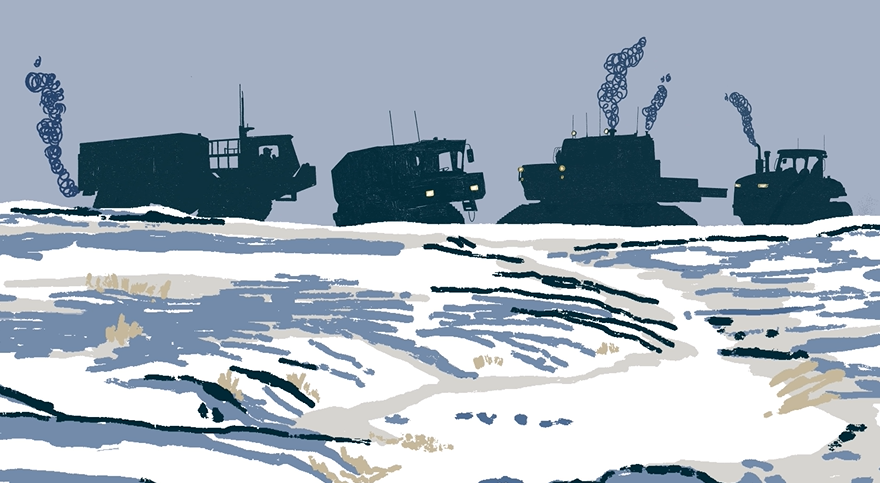
Thumper trucks and heavy equipment would trample the land in a grid pattern over many months, and could break through layers of snow and rip up vegetation while driving animals from their food and homes. The already vulnerable population of Beaufort Sea polar bears could suffer if these caravans of industrial trucks drive mothers from their dens before cubs are ready to leave or even destroy dens with bears in them.
Meanwhile, man camps dragged by massive bulldozers would churn over the snow-covered tundra and the lichens and plants vital to the Porcupine caribou herd while crushing burrows and dens in the subnivean spaces where animals live or cache and look for food.
The scars on the land would last for decades.
How can you help?
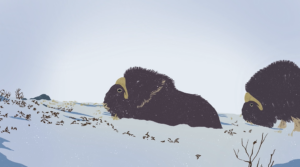
Still from Trustees’ seismic animation.
Seismic testing requires that AIDEA get authorization from federal agencies, including an exploration permit from the U.S. Bureau of Land Management that should include a review of subsistence and wildlife impacts. The Bureau will review the current application and might release an Environmental Assessment before issuing a permit. There could be a short comment period on that assessment, but it’s not guaranteed.
AIDEA will also need an Incidental Harassment Authorization that, if issued, preemptively allows for harm to polar bears and ice seals during the period of exploration. This authorization requires the U.S. Fish and Wildlife Service to look at potential harms, require mitigation measures, and hold a 30-day comment period.
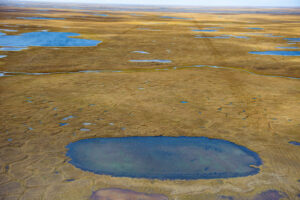
Seismic scars left on the arctic tundra west of the Arctic Refuge on the north slope of Alaska. Photo by Florian Schulz.
Right now, we don’t know the timing of any of these processes, but we’re tracking them and will be engaging at every stage to make sure agencies know what’s at stake and what the law requires.
We would love to keep you informed on how to take action to protect the coastal plain of the Arctic Refuge in the months to come. Sign up for our updates now.