

Agencies take wrecking ball to public process
By Madison Grosvenor
Imagine learning that a project is being proposed near a place that matters to you—a river where you fish, a trail you use, a hunting area your family has relied on for generations, or a community you call home.
You may want to know exactly what is being proposed, what the potential impacts are, and how to participate in the decision. You may wonder, is anyone listening to the people who know the place best?
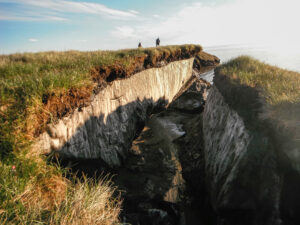
Coastal erosion reveals permafrost in the Teshekpuk Lake Special Area of the National Petroleum Reserve – Alaska. Photo by Brandt Meixell, USGS
A new mine, road, pipeline, energy facility, or industrial activity can alter watersheds, wildlife habitat, subsistence practices, communities, and landscapes Alaskans have depended on for generations.
Ideally, the people who live closest to these projects or have relied on them should have a meaningful opportunity to raise concerns, share knowledge, and help shape the decisions affecting them. But the Trump administration has degraded opportunities for meaningful public participation in Alaska and across the country.
Gutting laws that give people a seat at the table
Currently in Alaska, we are witnessing an all-out assault on foundational laws like the Alaska National Interest Lands Conservation Act, the Clean Water Act, and the National Environmental Policy Act— all of which protect public participation and ensure that Alaskans have a voice in decisions affecting their lands, waters, and communities.
The National Environmental Policy Act has historically required federal agencies to take a hard look at the potential environmental consequences of major projects before making decisions or taking action on them. Those analyses can take the form of environmental assessments or, when more extensive review is needed, more detailed environmental impact statements. A full impact statement offers a more rigorous environmental review by analyzing the project’s environmental impacts, alternatives, and potential mitigation measures, and—importantly—requiring opportunities for public participation throughout the review process, including when the agency determines the scope of its review, after the draft statement is written, and again when the final statement is issued. The process culminates with a decision and the explanation behind it.
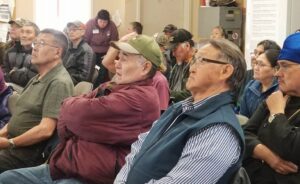
Alaskans showed up at the New Stuyahok hearing to speak out against the Pebble mine in 2018. Photo courtesy United Tribes of Bristol Bay.
Environmental review processes, with opportunities for public participation built into them, have historically helped bring environmental information, local knowledge, expertise, experience, and community concerns into federal decision making.
But, In January 2025, the Trump administration executive order directed the Council on Environmental Quality to rescind rules implementing the National Environmental Policy Act. These revoked rules had defined detailed requirements for public notice of proposed federal actions with defined public comment periods built into these procedures.
This means there is no longer a government-wide requirement that an agency prepare a draft environmental impact statement for public review, or that it accept, consider, or respond to public comments.
Relevant information about review processes has been increasingly withheld, public comment periods have been too brief, and transparency is at an all-time low even when public participation opportunities arise.
“Streamline” is code for “shut up”
The U.S. Bureau of Land Management is proposing a rule, at the behest of the Alaska Oil and Gas Association, that could dramatically shrink the public’s role in authorizing oil and gas extraction in the largest unit of public land in the country, the National Petroleum Reserve-Alaska. If adopted, the rule would require the Bureau to approve certain proposals within 60 days.
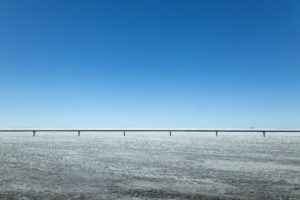
The Pikka Project in the National Petroleum Reserve-Alaska as of May 2026. Photo by Andrew King
In other words, the rule could allow massive projects akin to the ConocoPhillips’ Willow project to fly through the agency process without looking closely at how communities, wildlife, and landscapes would be impacted—and with no meaningful chance for people to comment. The Bureau gave little information about this proposed rule in its vague notice of intent, making it impossible for the public to form specific comments about what the scope of review should look like.
Additionally, when the Bureau published the draft environmental impact statement for purposes of public comment, chapters one and two were provided, but not the draft analysis of environmental impacts in chapter three—the most important part!
People cannot meaningfully participate in a process when critical information is withheld both before the review process and after release of the draft impact statement.
Meaningful participation under the law requires that the public be given access to the information necessary to understand, evaluate, and respond to the agency’s proposed action.
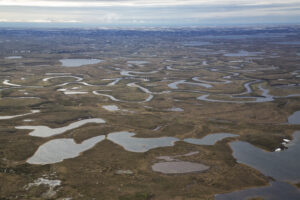
Northeast National Petroleum Reserve in Alaska. Photo by Bob Wick.
But even if we look beyond the initial skirting of meaningful participation in the environmental review process of this proposed rule, the rule itself is designed to erase any opportunity for public comment on any future project proposals that lie within 25 miles of an existing project in the western Arctic. Under the rule, there is no provision providing for public participation and input or public notice of these projects, and the proposal appears to be attempting to exempt any applications from notice and public hearing requirements, cutting the public out of decisions about the land they live near, hunt on, recreate in.
Oil and gas expansion in the western Arctic can involve massive projects with significant consequences for wildlife, subsistence, communities, and climate health. Previous project plans have required thousands of pages of technical analysis and have generated tens of thousands of public comments.
The proposed streamlining rule is a stark example of how public participation is being demeaned, and in some cases, taken away altogether. A process that withholds information while establishing a framework in which projects could be approved within 60 days without public notice or the chance to provide input, reduces participation into an agency checking a box.
Speaking up for speaking up
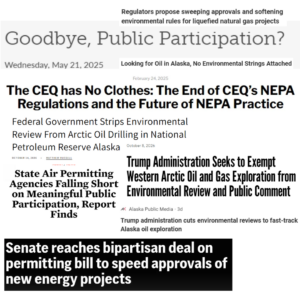
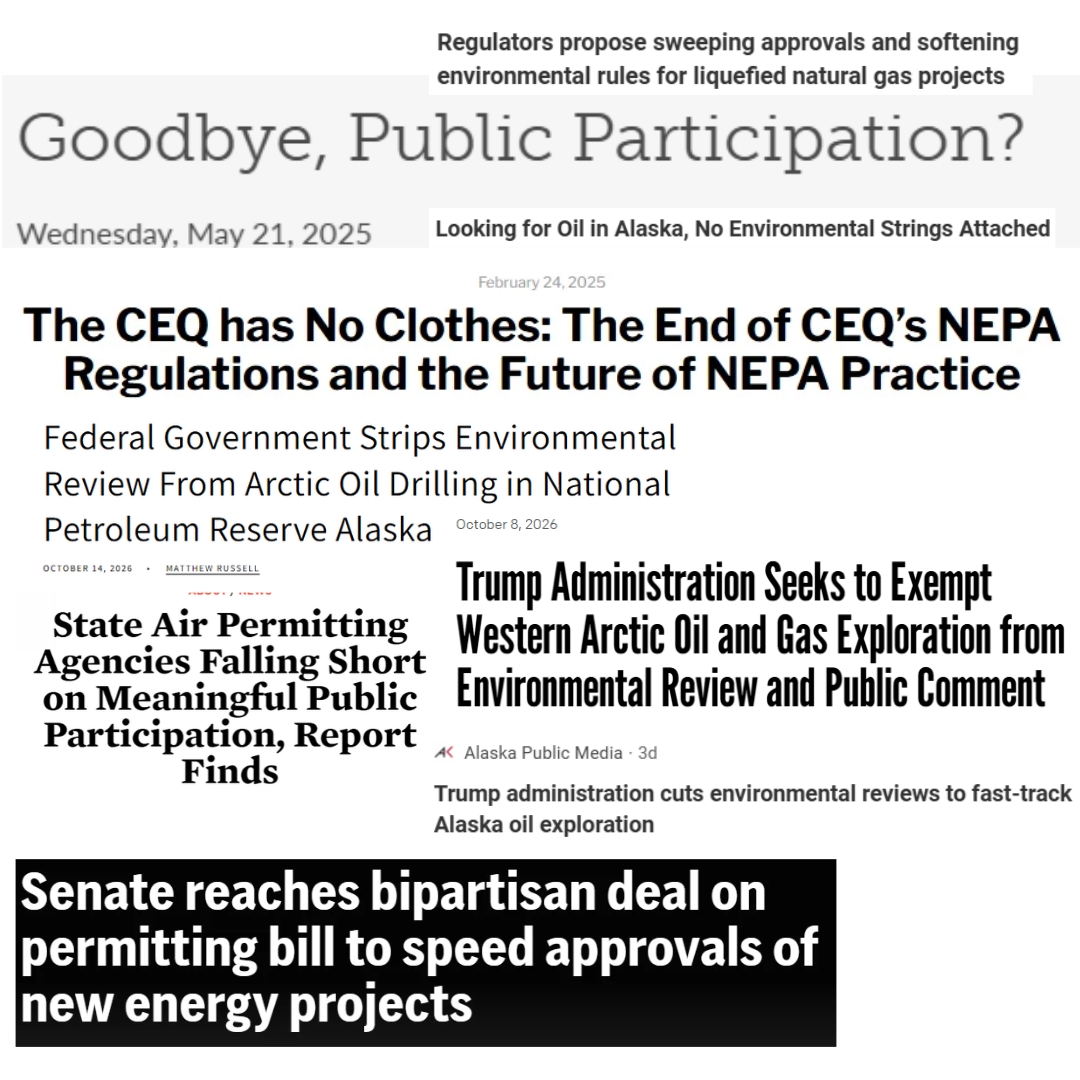
A collage of headlines surrounding the stripping of environmental review through streamlined permitting and the subsequent loss of public participation.
The threats to public participation continue to mount, so we continue to defend it in court. On the first of the month, we filed an appeal in Alaska Superior Court challenging the State of Alaska decision to grant an easement on State lands for the Ambler industrial road. We argued that the agency failed to provide essential information about the project (including the design, location, and construction plans) and potential impacts when holding a public comment period, making it impossible for Alaskans to participate in a meaningful way.
More broadly, Alaskans are pushing back against these anti-participation actions all across the State.
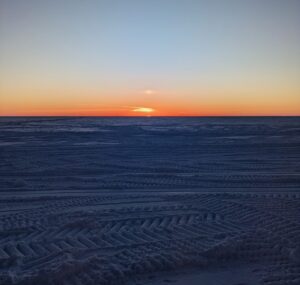
Tire tracks across the western Arctic tundra. Photo courtesy of BLM.
The Bureau of Land Management is proposing what they call the Wintertime Oil and Gas Exploration Categorical Exclusion with no comment period. It would allow for seismic activity, construction of temporary ice roads and snow routes, construction of ice pads and use of camps associated with support equipment, the drilling of wells, and more. When coupled with the Bureau of Land Management’s proposed rule prompted by the oil and gas industry, this categorical exclusion would end environmental review and public process for oil and gas exploitation of the western Arctic.
The U.S. Army Corps of Engineers recently accepted comments around permitting of an 80-mile portion of the West Susitna Industrial Access road under “emergency procedures” to fast-track the project. The agency issued notice for comment on Sept. 25 and closed the window on Oct. 13, a mere 18 days.
Trustees submitted comments noting, among many other things, that the effort to rush the process skirts National Environmental Policy Act and Tribal consultation requirements and keeps Alaskans out of the decision-making process (learn more about what’s going on in the West Su here).
Similar affronts to public participation are afoot across the country, with additional efforts to rush permitting efforts and cut out the public from decisions on energy projects like oil drilling and data centers and rolling back protections for clean water and endangered species.
Take the mic while you can
-
- Speak up for the western Arctic. You can oppose the rule that would fast-track massive oil and gas projects in the Western Arctic within 60 days without environmental review or real public input. The Northern Center provided this helpful overview of the rule and how you can speak up. Submit your comments to the draft environmental impact statement portal as well as to the portal for the proposed rule itself. You can use the same comments for both, focusing on your opposition to any rule that undermines adequate review and public input. Comments are due November 9.
-
- Say no to the Arctic mine and the Ambler road. A large-scale open-pit mine is being proposed in the foothills of the Brooks Range. The mine would require access via the proposed 211-mile Ambler industrial mining road. The scoping period is open for public comment until Nov. 2. Add your name to a letter urging the Army Corps to evaluate the full scope and cumulative impacts of the Arctic mine.
-
- Defend the West su: The comment period for the draft 2027-2030 Statewide Transportation Improvement Program is open until October 29. This includes plans for the West Susitna Industrial access road.