


Another Izembek lawsuit, plus a court ruling that makes corporate CEOs swoon
By Dawnell Smith
Late last month we sued the U.S. Army Corps of Engineers for unlawfully issuing a Clean Water Act permit allowing construction of a privately owned road in Izembek National Wildlife Refuge. Shortly after, we filed a motion requesting that the court stop construction activities while the case makes its way through court.
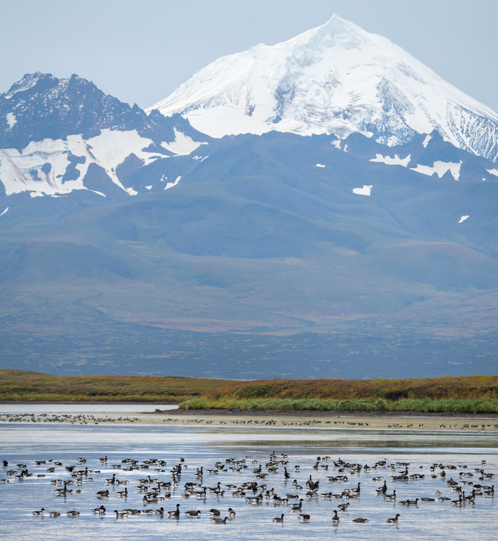
Brant flock in Izembek Lagoon. Photo by Running Wild for Defenders of Wildlife.
This lawsuit adds to our litigation on Izembek. We’re still waiting for a court decision in the 2025 lawsuit challenging the Interior Department for violating multiple laws when negotiating behind closed doors and then authorizing a land trade giving designated protected wilderness lands on Izembek Isthmus to King Cove Corporation for the purpose of a road.
“Interior bypassed Congress and the public when making that backdoor deal, and now the Army Corps has greenlighted bulldozing through an area that’s the ecological heart of the refuge,” said Michelle Sinnott, senior staff attorney with Trustees and lead on both cases. “These federal actions imperil the future of Izembek and could open the door to future Interior heads trading away protected public lands in places like Denali or Katmai national parks and preserves to private interests with no oversight and no legitimate consideration of impacts.”
These two lawsuits, filed by Trustees on behalf of five clients, seek to hold the Trump administration accountable for trampling over a litany of federal laws when trading away wildlife refuge lands. The privately owned road threatens a region that sustains entire populations of birds like Black brant, along with a robust community of life that includes bears, wolves, fish, caribou, and walrus, as well as people who rely on Izembek for their livelihoods and ways of life.

A red fox watches behind the grass in Izembek National Wildlife Refuge. Photo by Running Wild for Defenders of Wildlife.
A related lawsuit brought by the Native Village of Hooper Bay, the Native Village of Paimiut, Chevak Native Village, and the Center for Biological Diversity explains how a road would disrupt and degrade vital and irreplaceable wildlife and migratory bird habitat important to communities in western Alaska.
The stakes go beyond Izembek. Most Alaska villages lack roads or robust health clinics like the one in King Cove. They too want support for improved infrastructure for health, safety, and access, yet this money pit of a road through Izembek keeps getting public funds, political attention, and agency approvals.
Why? The fact of the matter is that if the land trade at the center of these lawsuits goes unchecked, an Interior secretary could do the same with national parks and refuges across Alaska, slowly chinking away and eroding the ecological health and integrity of public lands across the state.
Yes, the very landscapes that nourish Alaskans and draw people to the state could be cut, sliced, and carved for private purposes until they’re beyond recognition. This is our home. You can bet we’ll keep fighting to protect it.
Court ruling defies common sense. We just appealed.
Corporations don’t have hearts and can’t love you, but a court ruling this month gave mining corporations something to love. The Alaska District Court concluded that the courts have no jurisdiction over federal land transfers to the State of Alaska once they’ve been tentatively approved, even if those transfers were made through illegal public land orders.
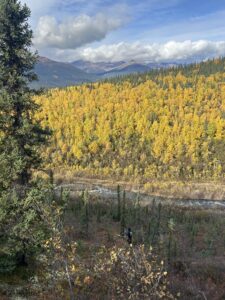
A wave of golden birch trees sweeps up a slope in the Dalton Highway Corridor north of Coldfoot, Alaska.
In other words, the judge denied our motion requesting an injunction stopping all federal land transfers during litigation while also concluding that there’s nothing we can do about tentative land transfers even if we win in court.
So, we appealed to the 9th Circuit Court of Appeals last week. The appeal relates to a March lawsuit challenging the Interior Department with unlawfully removing long-held federal protections of public lands stretching from the Yukon River to the Brooks Range. Shortly after we filed that lawsuit, Interior issued “tentative approvals” for over 1.38 million acres of public land transfers to the State. Trustees filed a motion requesting a preliminary injunction to stop further land transfers in response, which the District Court rejected.
“We appealed the District Court’s decision because it allows Interior to transfer public lands even as we’re litigating the legality of the agency’s actions and then gives our clients no remedy if we win in court,” said Bridget Psarianos, senior staff attorney with Trustees for Alaska.
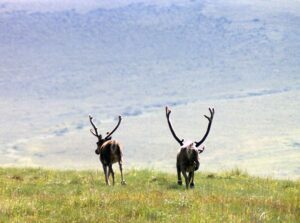
Caribou roam the Dalton Highway corridor just north of the Yukon river. Photo by Daniel S. Katz.
Interior gutted long-held protections in February to transfer land to the State, which has a lower bar for protecting subsistence and mitigating impacts from extraction projects. The agency ignored the concerns of communities and public interest to benefit private mining interests by easing the way for the costly, publicly funded Ambler road.
Our clients went to court to hold Interior accountable to the law, not private corporate interests, and they deserve their day in court.