

Help protect the Arctic Refuge. Write your “Dear Big Oil” letter now
by Dawnell Smith
The Trump administration plans to auction off public land sacred to the Gwich’in and vital to the Porcupine caribou herd next month.
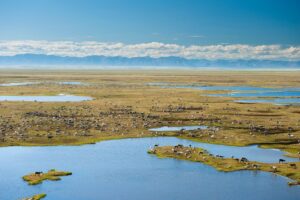
The Porcupine Caribou Herd. Photo by Florian Shulz.
To hold this oil and gas lease sale on the coastal plain of the Arctic National Wildlife Refuge, the U.S. Bureau of Land Management carved up a vast and integrated landscape that has nourished people, their cultures, and wildlife for millennia into tracts for oil corporations to bid on and exploit.
Never mind the millions of birds who migrate to and from the Lower 48 and all continents, or one of the last great caribou herds in North America, or the swaths of wetland and tussock cottongrass where caribou and birds as varied as snow buntings, tundra swans, American golden plovers, and long-tailed jaegers eat, nurse, nest and find refuge and cover.
Never mind the people who have lived and moved through the Arctic forever, building their lives, cultures, and traditions around the health of and their relationships with the land.
Actually, we do mind. The majority of Americans oppose oil activity in the Arctic Refuge, but not everyone has heard or cared to listen. Now is the time to say it again, a bit louder.
Here’s what you can do
The U.S. Bureau of Land Management is accepting bids from oil and gas interests through June 3 and will open those bids on June 5.
Then tell Congress to support the Arctic Refuge Protection Act and add your name to the Alaska Wilderness League’s “Dear Big Oil” letter to get right to the point: “If you’re thinking about setting up shop in the Arctic Refuge, think again. Drilling risks catastrophic climate impacts, threatens Indigenous communities, damages fragile ecosystems, and is a financial gamble with little long-term return.”
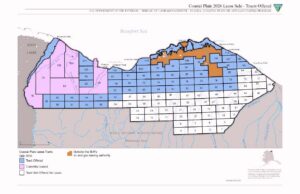
Tracts offered in the coastal plain leasing sale. Courtesy of BLM.
The Bureau put over 680,000 acres of the coastal plain on the auction block—an area twice the size of Canyonlands or Grand Teton National Park—and Congress has mandated more lease sales in the years to come. The minimum bid for the June 5 sale is a mere $25 an acre for ten-year plus terms. Let’s be clear: once oil industrialization begins on any of these leased lands, the damage will ripple through the entire region and beyond, and last for much longer than ten years.
Oil companies might bid pocket change on an intact Arctic region that supports Gwich’in and Iñupiaq communities and life as varied as the mosses, lichens, sedges, grasses, shrubs, and flowering forbs of the tussock tundra to pygmy shrews and polar bears. But we don’t have to sit back and be quiet about it.
Now is the right time to tell oil companies to stay out of the Arctic Refuge.
Meanwhile in court…
Of course, our work continues in court. We challenged the Arctic Refuge leasing program during the first Trump term and amended and supplemented that litigation earlier this year to account for recent actions by the Trump administration to rollback protections and reopen the entire Coastal Plain to oil and gas. The Trump administration broke the law when authorizing its leasing plan by ignoring the harm oil operations will do to land, water, the Porcupine caribou, and to the people who have held that land sacred for millennia.
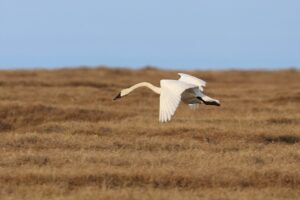
Tundra swan in flight above the tundra in the Arctic refuge. Photo by Shiloh Schulte.
“Given the serious legal violations this administration has committed in its decisions around its leasing plan and this lease sale,” noted Suzanne Bostrom, one of the Trustees’ senior staff attorneys in the Arctic team, “we will argue that any leases issued should be vacated.”
We will be submitting our filings to the court this summer, but the outcome of that case and timing for a decision is uncertain. Telling potential bidders that drilling in the Arctic Refuge is a gamble and losing bet is one thing oil companies need to hear loud and clear.