

The latest on the Izembek and West-Su roads
By Dawnell Smith
The Alaska Department of Transportation has requested Federal Highway Administration funds through the Statewide Transportation Program, or STIP, for a mining road in the Susitna Valley and a privately owned gravel road in Izembek National Wildlife Refuge. In both cases, the State has split projects into portions or phases to try to promote incremental construction, secure public money, and elude legal obligations to assessing and addressing the full scope of impacts on land, water, wildlife, and communities.
In late October, we submitted comments outlining why these projects don’t qualify for STIP money and should be rejected.
Protect the West Su
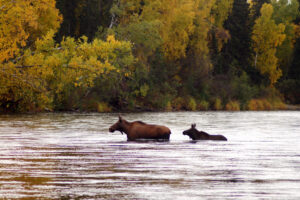
Moose crossing a river in the Susitna Valley. Photo by Cecil Sanders.
The Department of Transportation has requested STIP money for a 22-mile section of a 100-mile-long industrial road in the Susitna Valley northwest of Anchorage. This region sustains thriving salmon runs and wildlife, and recreational and sporting opportunities. The Iditarod National Historic Trail runs through the area. The area’s natural landscape supports an array of small businesses. The proposed road would benefit mining corporations instead.
The State request for STIP funds describes the 22-mile section of road as a connection between the Alaska highway system and recreational lands west of the Susitna River, when in fact this segment is part of a 100-mile road proposal aimed at giving mining corporations access to remote regions of the Susitna Basin to mine. The Alaska Industrial Development and Export Authority is pursuing the remaining 78 miles of the road through a separate process.
The National Environmental Policy Act and other legal provisions do not allow a single road to be lawfully permitted in sections. Splitting projects into pieces like this also makes it difficult for people to understand and give meaningful input on the full scope of impacts of a road on land, water, wildlife, their lives, and their communities. For this and other legal reasons, this portion of the West Su industrial road is not eligible for STIP funding.

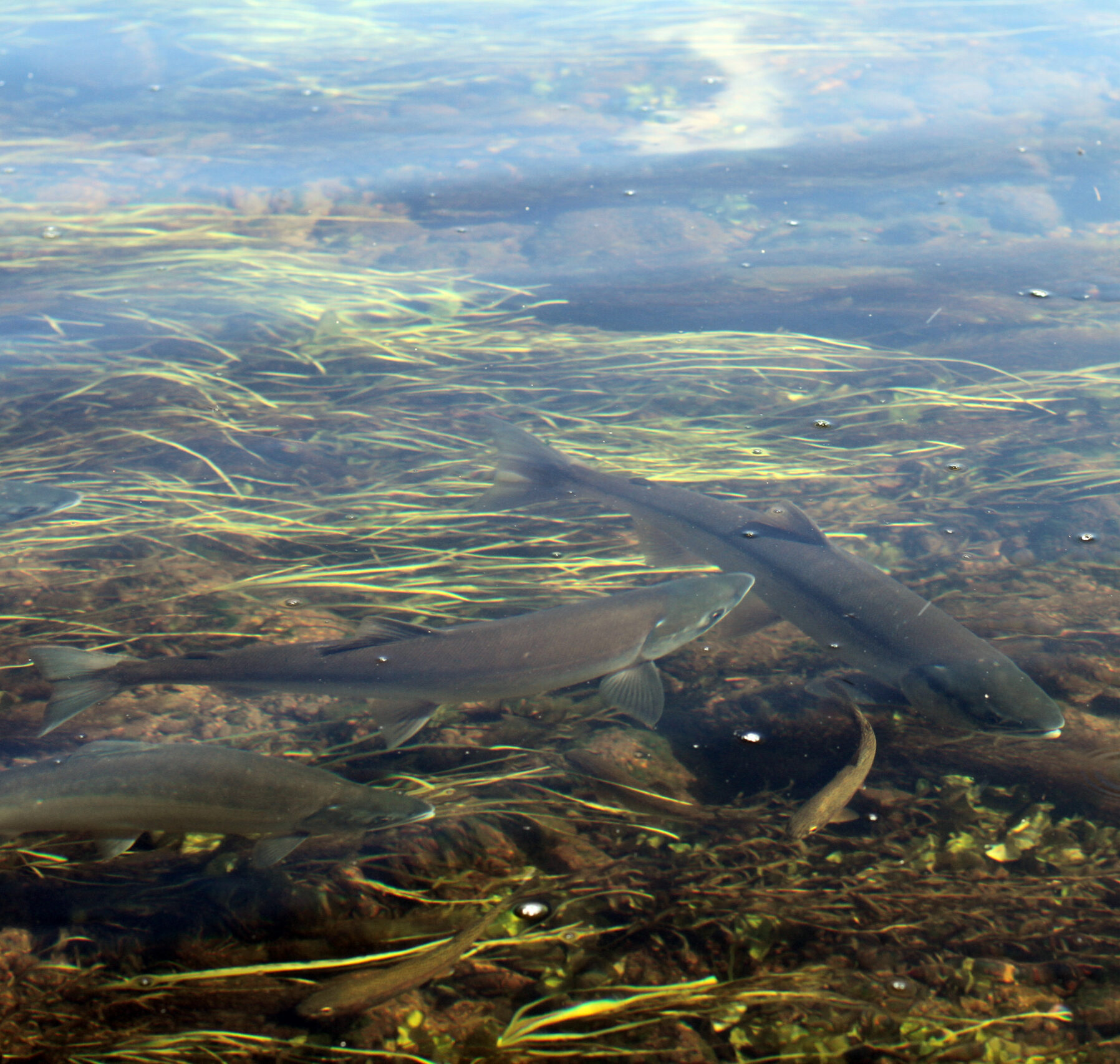
Rainbow trout and salmon in Fish Creek in the Susitna Valley. Photo by Katrina Mueller.
There is broad local opposition to the road because of its threat to the region, but this road also comes at an astonishing price tag.
The anticipated full cost of this 22-mile section “comes in at an eye-watering total of more than $227 million,” states Trustees’ comment letter, “making it the sixth most expensive project proposed in the FFY 2027-2030 STIP. “Considering the vehement local opposition to this project that threatens to run roughshod over the wishes of Alaskans in favor of out-of-state and international mining interests, this money should be spent repairing and improving other degrading infrastructure throughout Alaska.”
Read Trustees’ comments here and find out how to get involved at Defend the West Su.
A fiscal ball and chain
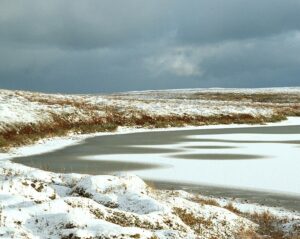
Izembek National Wildlife Refuge with a dusting of snow. Photo by USFWS.
A U.S. District Court ruling in August vacated a Trump administration land exchange that intended to make way for a road in Izembek National Wildlife Refuge, but that hasn’t stopped the State of Alaska from pushing construction forward anyway. After dumping public money into the project already, the Department of Transportation has requested more federal funding through STIP.
As the court ruling determined and our comment letter reiterates, funding this road would violate the law. Splitting the road project into two sections does not change that.
Moreover, the proposed road would be functionally a local road—not connected to any State or federal highways—and may not qualify for federal funding at all. Since the State is proposing the first stage of the road as an advance construction project in which it would front the costs and seek reimbursement when completed, it would be unable to recoup $20 million if the Federal Highway Administration determines it’s ineligible for federal funding.
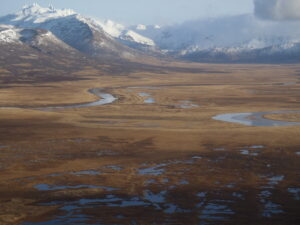
Izembek wilderness. Photo by Doug Damberg.
Plus, if the Federal Highway Administration concludes that a state has violated or failed to comply with law in connection with a federally funded project, it can withhold funds for that project and “withhold approval of further projects in the State.”
The consequences of this fiscally irresponsible funding request could reach far beyond a privately owned local road.