


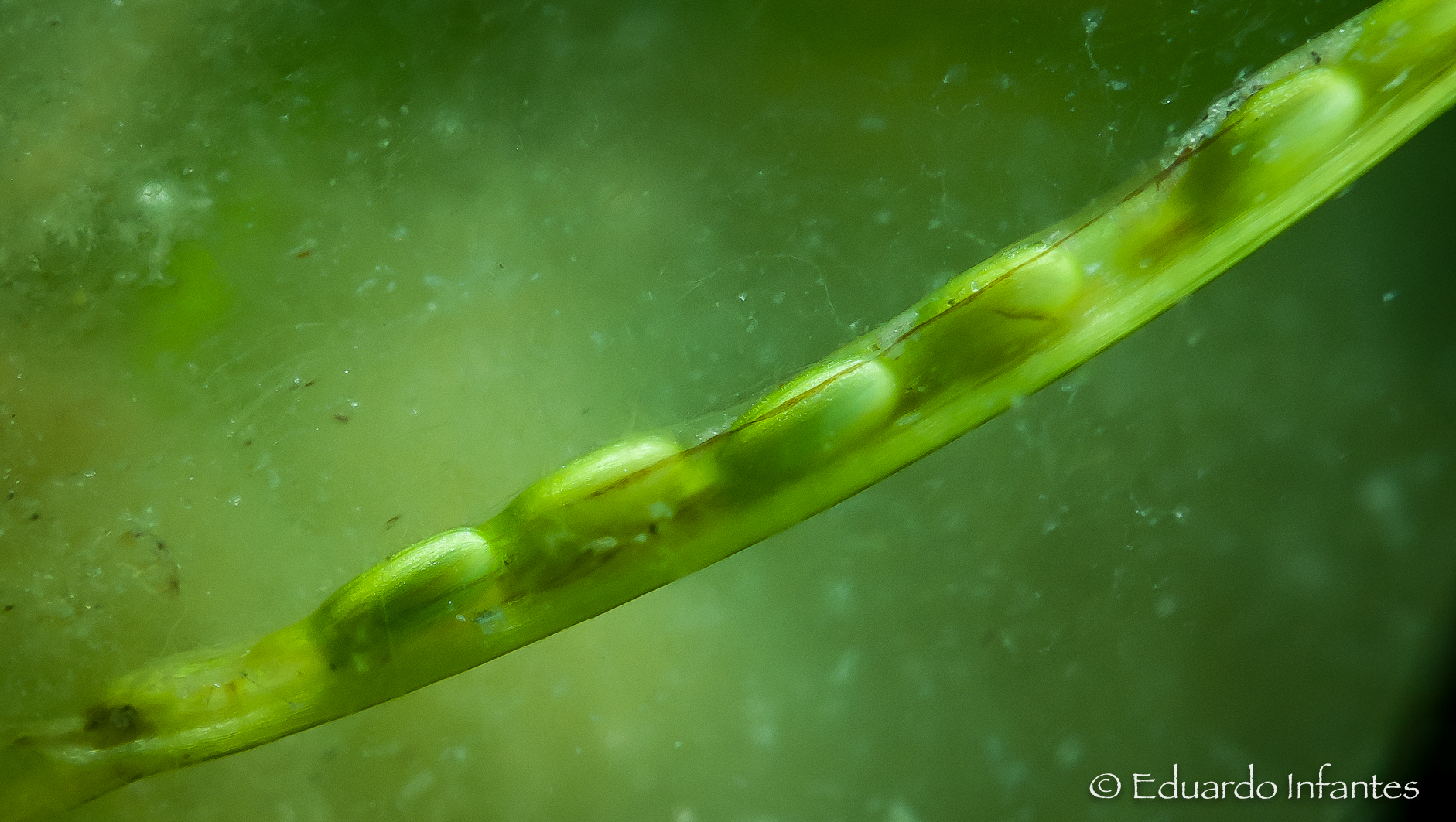
On beings and biomes–eelgrass is the sexiest plant alive
By Dawnell Smith
Once upon a time, a land plant got salty.
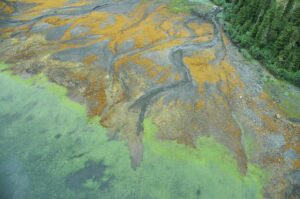
Eelgrass in Prince William Sound, Alaska. Photo by Mandy Lindeberg, NOAA
The plant adapted to the sea and took to estuarine areas where it found tidal rhythm with living communities of fish, crustaceans, algae, marine mammals and birds threading through its sometimes murky, often misty beds.
With sinewy eel-like leaves that flow into meadows containing multitudes, this sea grass embraces Earth with a sprawling root system while blooming spring flowers and releasing buoyant seeds that drift into fertile ground. Rhizomes spread, fronds undulate, and grass beds collapse in mud or sand when the tide retreats.
Eelgrass is the sexiest plant alive.
Zostera marina
The scientific name for eelgrass rolls off the tongue. Zostera marina: ZOH-ster-uh muh-REE-nuh.
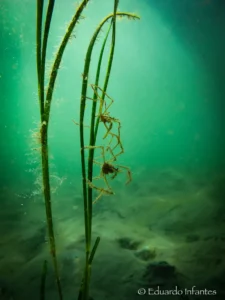
Two long-legged spider crabs blend in among the eelgrass canopy. This species of spider crab is found on the coast of Europe and west Africa from Norway to South Africa.
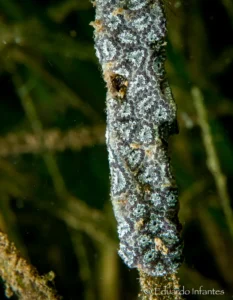
Epiphytes like algae, sponges, bryozoans, hydroids, and tunicates attach to the leaves or stems of eelgrass. Photo by Eduardo Infantes
Repeat the word and it becomes a meditation.
Repeat the word while watching eelgrass sway and it becomes a ritual of calm.
Holding us together
Eelgrass lives in coastal regions worldwide and is vital to Southwest Alaska where it plays a starring role in coastal habitats like Izembek Lagoon, one of the largest eelgrass meadows in the world. Here, eelgrass bed provide animals with a habitat rich with spawning grounds, nursery and foraging areas, a home and refuge.
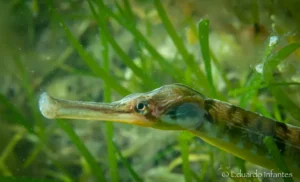
Pipefish rely on eelgrass meadows for food and shelter, mimicking eelgrass leaves. Photo by Eduardo Infantes
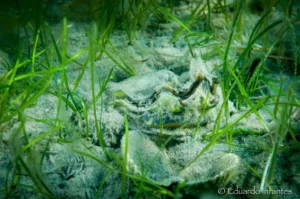
Pacific oysters in a patch of eelgrass. Photo by Eduardo Infantes.
Epiphytic algae, detritus, and associated micro-invertebrates live in eelgrass beds, nourishing amphipods and isopods, who in turn feed fish, shorebirds, and marine mammals. Pacific herring, sea otters, harbor seals, migratory birds, crustaceans and an array of microscopic life thrive in these meadows.
Tens of thousands of Pacific black brant rely on Izembek’s eelgrass during their migrations, and Alaska Native communities rely on zostera marina to sustain animals like black brant and other geese and fish like herring for food and as part of their culture.
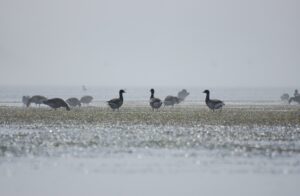
Brant on eelgrass in a foggy Izembek, Photo by USFWS.
Eelgrass holds beach sands and soils together. Eelgrass keeps water clear and clean. And eelgrass gives us an indicator of the health of coastal areas precisely because of its relationship with a wide diversity of plants, animals, and human communities.
This Cornell Lab of Ornithology video shows the array of life the Izembek eelgrass beds support and, at about 8 and a half minutes, offers a view of the plant’s scope and reach.
Expanding roots, drifting seeds
Zostera marina’s rhizome system of roots and stems expands horizontally underground, like clover and wild strawberries, lilacs and ferns. An eelgrass bed can consist of clones from one original plant.
Zostera marina also reproduces sexually. Male and female flowers bloom in late spring; drifting pollen fertilizes the plant.
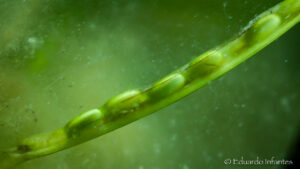
Photo of eelgrass seeds by Eduardo Infantes.
Sunshine and cold water
Eelgrass grows in sandy or muddy sediment in the low tides of semi-protected beaches. Ribbon-like leaves grow from a few feet to 10 feet long in water as deep as 20 feet or more. If in shallow sandy areas, eelgrass tends to have shorter leaves while plants in deeper, muddy, quieter conditions tend to grow longer leaves.
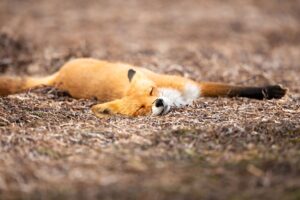
A fox napping on beached eelgrass. Photo by Lisa Hupp, USFWS
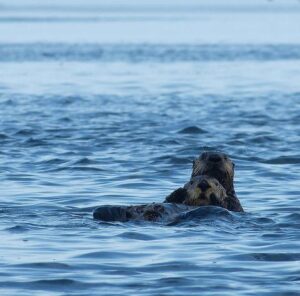
Sea otters nurse in the eelgrass beds of Izembek Lagoon. Photo by Kristine Sowl, USFWS
Zostera marina sways with the tides underwater, and can matt down when exposed to air. The plant thrives in sun and cold water, as do the animals who thrive within these meadows.
When it thrives, we thrive
Eelgrass cycles nutrients, stabilizes sediments, keeps water clean and clear, reduces erosion, and holds carbon through its mass and the surrounding sands and muds. Playing this role, Zostera marina reduces the carbon dioxide in the atmosphere while giving plant and animal life a place to thrive.
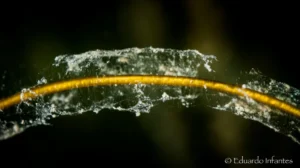
Chorda filum, a macroalgae, is a common sight in the eelgrass meadows of Sweden. Photo by Eduardo Infantes
Not only have humans used eelgrass as food, building and cooking material, and to restore nearshore areas to reduce erosion, but we have also relied on these eelgrass meadows to nourish life important to our survival—as food, as kin, as part of our essential relationship with land, water and other living beings.
The threats to eelgrass include the warming climate and human activities that degrade coastal areas or leech pollutants or other materials into those waters.
Learn more about eelgrass from Swedish research Eduardo Infantes, who let us use some of his underwater photos in this article. Many thanks to him!

Clouds and color from the setting sun reflect in the calm water of Izembek Lagoon. Photo by Lisa Hupp, USFWS.
This is the tenth in our “Beings and biomes” series. You can find previous articles below:
- On beings and biomes–the wolverine
- On beings and biomes—the boreal forest
- On beings and biomes—keystone and indicator species
- On beings and biomes—a year in the tundra
- On beings and biomes—an intertidal abundance
- On beings and biomes—beluga whales
- On beings and biomes—caribou and their migrations
- On beings and biomes—the perpetual homecoming of migratory birds
- On beings and biomes—wetlands as the center of our everything