
Small things, big bears—Alaska News Brief March 2026
Remember back during the pandemic when people started seeing more animals in cities? A pack of jackals took over a park in Tel Aviv, Israel. Young pumas searched for food in Santiago, Chile. Coyotes yipped along San Francisco streets.
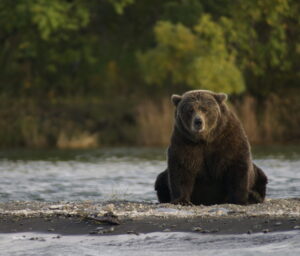
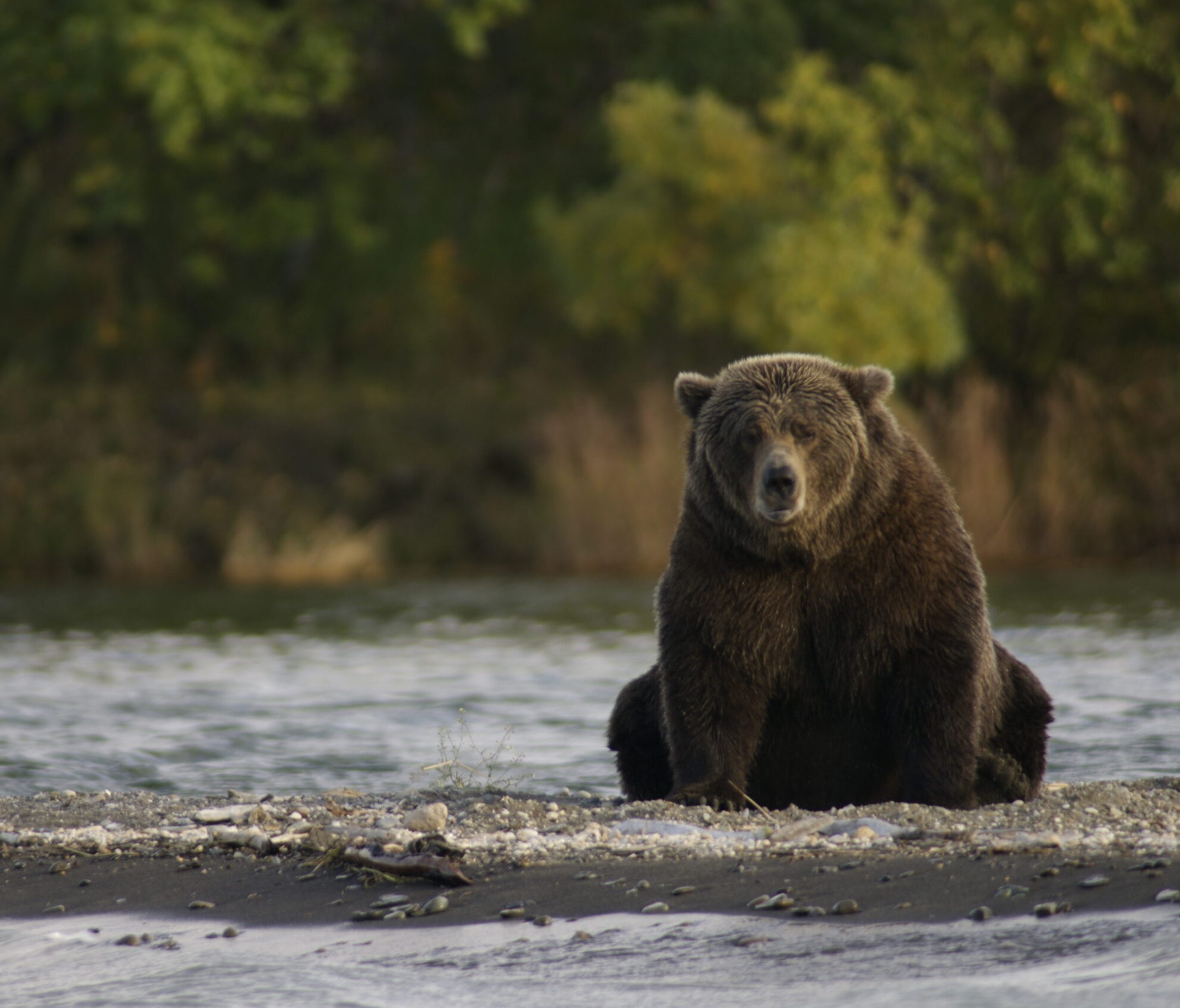
A brown bear sits and rests in Katmai National Park and Preserve. Photo courtesy of NPS.
Animals invisible to most people most of the time showed up where we rarely see them—a testament to how closely our human lives intersect with other living beings.
I went to school in Santa Barbara because I wanted to be around whales. I ended up a lawyer in Alaska because doing law work felt like an effective way to protect many more living beings in the world. In Alaska we interact more with moose in our yards, bears lumbering through our neighborhoods, the migratory birds everywhere, but even we need to remind ourselves that life all around us matters to our health and survival. We should think more about how we shoot ourselves in the feet.
Humans do explosive things. We use dynamite to fracture rock and earth for mining, roads, tunnels, buildings and so on. We build massive equipment to pummel, crush, plow through, and carve into rock, soil, and ice. We use the best—and worst—of human attributes to make rockets that take ambition and hubris into space. We make and use bombs.
We forget or ignore or don’t care that these volatile and violent creations and actions do lasting harm to entire systems of life—humans, plants, animals, water and land, the atmosphere and beyond, and they do so for generations to come.
Our role at Trustees is a narrow legal role, but it matters. What we all do matters, even when it feels small in the face of everything else.
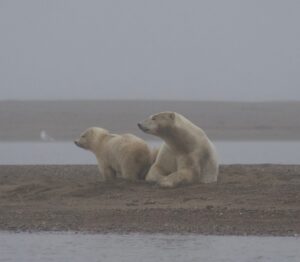
Sow and cub on the shore of the Southern Beaufort Sea. Photo by Bridget Psarianos.
Calls to decision-makers can break through. Donations to advocacy groups and nonprofits can propel good policy and action. Speaking up can build momentum around stewardship and care.
There are so many things to speak up about but let me add a few easy ways you can stand up for Alaska’s wildlife right now.
The Trump administration just proposed a new rule around how oil and gas operators impact and harm Southern Beaufort Sea polar bears, arguably the most vulnerable population of polar bears; estimated at just over 800.
We have deep concerns about this rule, the way the agency conducted its analysis of impacts, and how it violates the Marine Mammal Protection Act. The agency claims this regulation allowing oil activities to harass bears and potentially cause harm—like heavy equipment and noise prompting sows to abandon dens too soon for cub survival—will only impact bears in small numbers, but their own data indicates a high probability of death or serious injury.
You can oppose this regulation and tell the agency that there should be no harm or impact allowed to these bears or North Slope walruses during oil activities in the region. You can submit your comments by mailing them in or doing it online by April 8.
The Trump administration also just opened a comment period on another proposed rule that would rollback protections for bears and wolves on national preserves in Alaska. This would mean the U.S. National Park Service would disregard its statutorily mandated obligation to protect natural wildlife abundance and diversity in national parks lands and instead allow practices like brown bear baiting that take place on state lands. Don’t’ even get me started about state oversight of wildlife or the destructive and scientifically unsubstantiated state sanctioned Mulchatna bear shooting program.
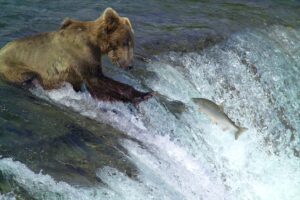
Brown bear fishing for salmon in Katmai National Park. Photo courtesy of the National Park Service.
Let’s put it this way: Imagine going to Katmai National Park and Preserve to see bears who have grown tolerant of humans only to learn that some of those bears crossed an invisible park v. preserve line that they cannot recognize and do not abide and were then shot by trophy hunters waiting by a bait station loaded with donuts.
This rule is unacceptable. It’s unlawful and dangerous, and it panders to trophy hunters through groups like the Safari Club and their moneyed interests. Tell this administration you oppose this rule by commenting by mail or online by April 9.
The few minutes we take to engage on behalf of other people, other beings, other places can shape our future for generations to come. Add all those things up, and it becomes monumental.
See you out there.
PS. Thanks to supporters like you, we can continue fighting to protect Alaska’s land, water, air, wildlife and people.
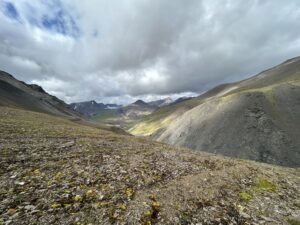
Mountains of the Dalton Highway Corridor near Atigun Pass. BLM photo by Tyra Olstad.
News on Arctic lawsuits and lease sales
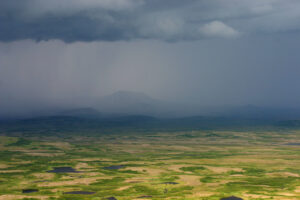
Storm clouds approach the proposed site for the Pebble mine. Photo by Erin McKittrick.
Between a rock and a hard place—Pebble is still the monster lurking under the bed

A peregrine falcon soars above the Colville River Delta. Photo courtesy of Gerrit Vyn/Cornell Lab.