

A midterm reflection: AIDEA’s spending spree and a bad permitting bill—Alaska News Brief November 2026
The shellacking Trump and the Republicans got in the midterms says a lot about how people feel these days.
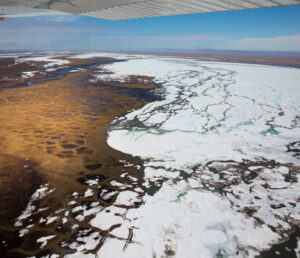
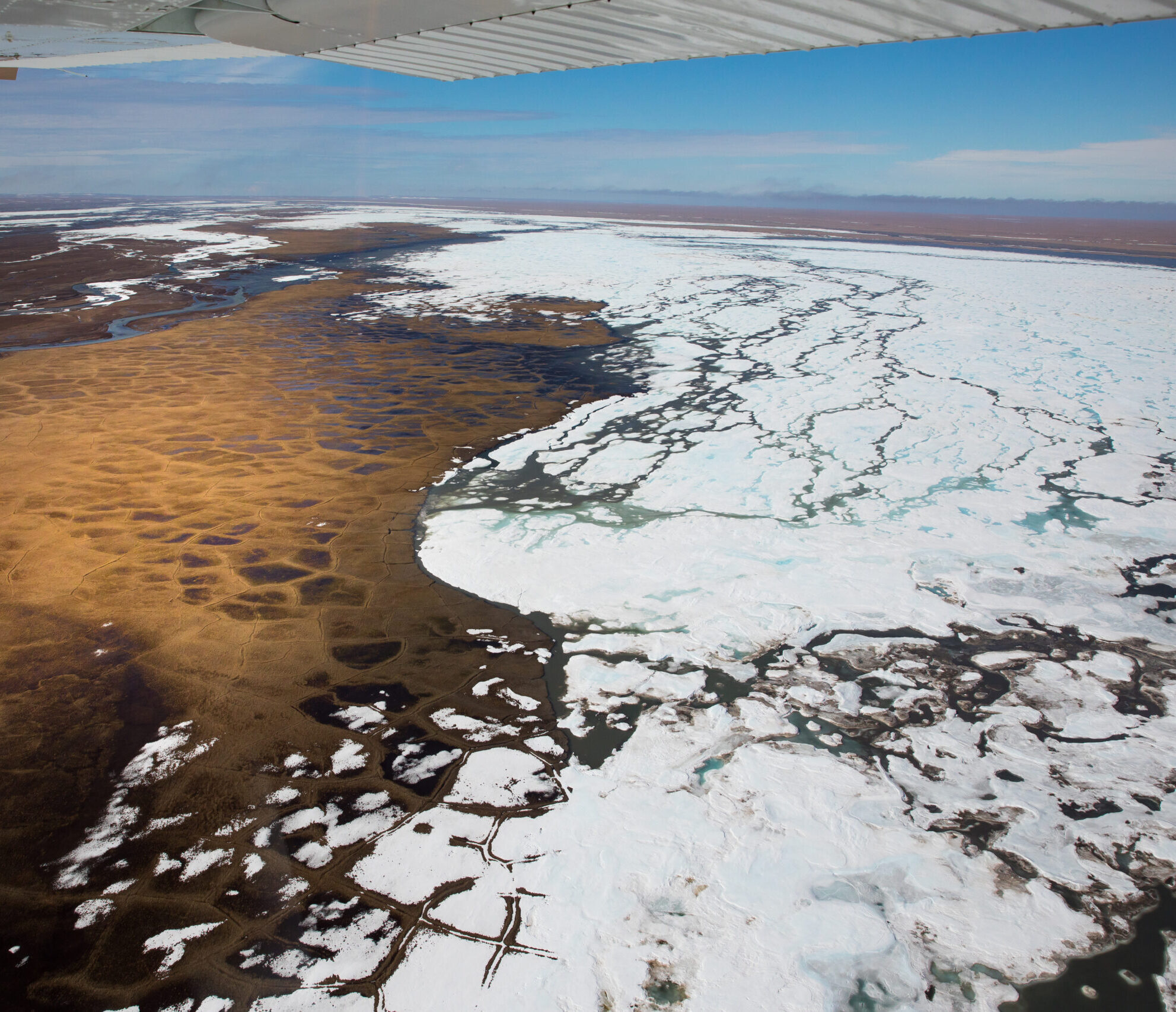
Arctic Refuge coastal plain and the Canning River. Photo by Lisa Hupp.
A whole lot of us care about bringing down the cost of things. We care about putting an end to corruption, state violence, illegal wars, and carelessness toward life. We care about accountability.
All that “caring about” things brought a shift in political power but will potentially change little for us and our work in the short term. If things go well, new leadership in Congress and in Alaska will slow down the flood of federal and state actions degrading the health of land, water, and living communities. More likely, we will continue to grapple with the Trump administration’s ongoing efforts to turn Alaska into an exploitation zone.
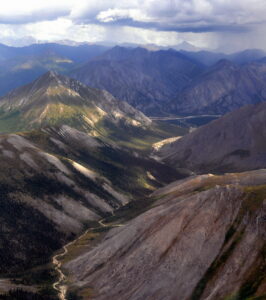
The headwaters of the Ambler River. Photo by Ken Hill NPS
Already, Alaska’s notoriously dodgy Alaska Industrial Development and Export Authority has spent over $225 million of public money in the last days of Gov. Dunleavy’s administration and appears poised to spend even more in his final weeks. This outlay includes a $25 million investment in an Idaho-based startup that designs small nuclear reactors, $10 million in geothermal, and $75 million to an AIDEA subsidiary promoting broadband, plus another $86 million to the proposed Ambler road and $25 million toward the proposed West Su mining road. If you’re Alaskan and have never heard of some of these projects, nor understand why AIDEA is putting so much public money toward them and not to your schools, local businesses, community housing relief, and other needs, you’re not alone.
AIDEA had another board meeting today and we don’t yet know what they did in executive session, but they may have poured even more money into oil and gas exploration in the coastal plain of the Arctic National Wildlife Refuge beyond the $175 million it already authorized in May. AIDEA also threw $34+ million toward the Port Mackenzie rail project earlier this year to support turning that site into a mining export hub.
AIDEA claims this spending is business as usual, itself a telling response, but it also looks like its handing out and locking up state money before the governor elect, Jonathan Kreiss-Tomkins, can say, “I do solemnly swear…”
On the federal level, a bill that would erode Tribal sovereignty and public participation, and eviscerate agency accountability to laws protecting clean water, wildlife, and public lands is before the Senate now and could pass before newly elected officials take office. This bill must be rejected.
Advocates for the Bipartisan American Affordability and Jobs Act of 2026 (S.5653), the 400-plus page bill negotiated behind closed doors, say it would speed up energy projects, make energy more affordable, and create jobs while ignoring how it would drive and lock in fossil fuel industrialization. A New York Times editorial even heralded how the bill could move forward clean energy projects and infrastructure without acknowledging how the bill gives the oil industry a free pass to raze the planet.
The New Republic had a more accurate take on the bill: A giveaway to big oil. The fossil fuel industry has sought this kind of reform bill for decades. (Perhaps you’ve seen or heard those incessant American Petroleum Institute ads?) Certainly, industry lobbyists had a say in what ended up in this bill, but you know who wasn’t in the room? Tribes, environmental groups and lawyers, or citizen groups concerned about data centers, immigration detention centers, toxins, climate, and so much more.

Collection of headlines covering the BAAJA bill.
Let’s be clear. The bill would weaken the Clean Water Act and jeopardize water quality, in particular section 404(c), which reined in the Pebble project. It also in effect repeals the National Environmental Policy Act by gutting many of its provisions and by insulating bad decisions from meaningful court review and upends the core functions of the Endangered Specials Act and the National Historic Preservation Act—all designed to project communities, wildlife, and ways of life, and to give communities and Tribes meaningful ways to participate and have recourse when laws are broken.
Dangerously, the bill would allow very short timelines for filing litigation and increase the required “showing of harm” for the purposes of standing and for being able to obtain a preliminary injunction to stop a project from doing on-the-ground harm while being litigated. If a plaintiff prevails in court on a National Environmental Policy Act claim, the bill would limit a court’s ability to vacate permits. Imagine a court finding Trump’s approval of the proposed Ambler road illegal because of air and water pollution, and caribou and subsistence impacts, but having no means to stop ongoing construction and on-the-ground harm while the agency addresses its legal errors.
Chillingly, the bill could also prevent an agency from suspending, canceling, revoking, or modifying a federal authorization once issued, even if the administration determines that the approval was unlawful.
This bill is moving forward because multinational corporations want certainty when getting permits, but communities want certainty too—certainty about the clean water, healthy public lands, the environment, public health, and food security to name a few. Is the Senate going to keep pushing this bill after the public spoke loudly and clearly that government needs to start caring for American citizens rather than bowing to corporations and vanity projects?
While this bill may have started out as something to get back to promoting renewable energy and energy transmission, it would take a wrecking ball to the rule of law and democratic decision-making. The bill as written should be called the “Build Data Centers and Big Oil Facilities Everywhere and Make Americans Pay the Price.”
If Congress passes this permitting bill as is, it will make it profoundly difficult to challenge or fix what Trump breaks.
The Senate needs to reject this bill post-haste and create a bill that meets the moment the midterm results demand.
PS. Thanks to supporters like you, we can continue fighting to protect Alaska’s land, water, air, wildlife and people.
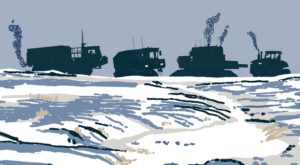
Still from Trustees seismic animation.
A seismic threat

Rainbow trout and salmon in Fish Creek in the Susitna Valley. Photo by Katrina Mueller.
The latest on the Izembek and West-Su roads
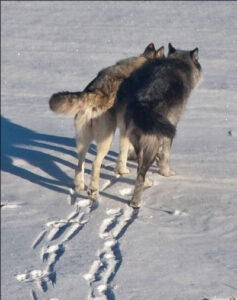
Gray wolves walk side by side. Photo by Gordon Haber.